Izon Joins SMART CRC to Advance Regenerative Therapies
The SMART CRC connects industry, research and healthcare to accelerate the translation of regenerative therapies – and Izon is now part of that mission.
Read more

Keep up with the latest Extracellular Vesicle, Virus and Nanomedicine news and research publications.

When it comes to EV storage, there are many variables to consider. Here, we share 7 factors to consider between the time of collection until samples are processed for EV isolation.

In line with the ongoing need for a targeted therapy against SARS-CoV-2, Idris et al. (2021) describe the development of a SARS-CoV-2-targeted siRNA-nanoparticle therapy for COVID-19.

Queensland researchers have embarked on EV/mass spec projects that may improve predictions of dairy cow fertility, and outcomes for pregnant women.

What motivates you to do your best work? Have you had a female mentor in STEM? Read up on roundtable reflections in recognition of the International Day of Women and Girls in Science, Feb 11, 2022.


On World Cancer Day 2022, we look to progress and challenges in areas critical to the development of extracellular vesicle-based biomarkers for early cancer detection.

The Tasmanian devil species is threatened by transmissible facial tumours. Do extracellular vesicles hold the key to better conservation strategies?

How tunable resistive pulse sensing (TRPS) enables precise EV measurements.

Why the signal-to-noise ratio is important for EV-based diagnostics.

10 recent qEV-enabled publications across diverse areas of EV research.

5 recent virus-related papers featuring qEV isolation or TRPS.

What does it take to make an EV biomarker successful?

The strong case for extracellular vesicle-based biomarkers.

qEV1: The new SEC column optimised for 1 mL sample loading volumes.
.jpeg)
Gen 2 qEV columns with novel resin deliver a higher level of EV purity.

A wrap-up of 5 recent publications featuring tunable resistive pulse sensing.

When EVs meet Alzheimer’s disease – exploring this fascinating area of research in light of World Alzheimer’s Month 2021.

Notes from a conversation with Assistant Professor Stephanie Jung, University Hospital of Bonn (Germany), who separated Hepatitis B and antibodies from EVs to enable functional EV-virology studies.

After an encounter with a not-for-profit organisation raising scientific literacy in NZ, Izon Science would like to share their story in the hope of garnering further support for the House of Science.

Sharing the story of France-based researcher Dr Gwennan André-Grégoire, who is working on unravelling the EV-related pathophysiology of glioblastoma multiforme.
Four reasons why storage conditions matter to the world of extracellular vesicle research.

An optimised, clinically relevant method for proteomic analysis of plasma EVs, featuring qEV isolation, is now documented in Cell Reports Methods.

Izon Science has recently executed a Product Development Agreement with BCAL Diagnostics.

On World Hepatitis Day 2021, we explore how researchers are pursuing extracellular vesicles as a way to improve outcomes for people with hepatitis.

A summary of work by Caputo et al (2021) who conducted a side-by-side comparison of ten analytical techniques for the characterisation of nanoplastics and microplastics.

BCAL Diagnostics is now listed on Australia’s sharemarket, the ASX. Izon Science and BCAL are co-developing the EV purification process for BCAL’s novel breast cancer test.

Key points from the fourth and final ISEV 2021 plenary talk by Jean Gruenberg, who discussed his group’s recent studies of tetraspanin sorting, endosomal membrane tension and ILV formation.

Highlights from the third ISEV 2021 plenary talk by Simon Carding, University of East Anglia, who discussed bacteria-derived EVs, their dynamics in the gut and their potential as drug delivery vehicles.

A wrap-up of the second ISEV 2021 plenary talk by Chantal Boulanger, INSERM. Here, the focus was on EVs in relation to arterial contraction and myocardial infarction.

A summary of the first ISEV 2021 plenary session by Andrew Hill, La Trobe University. This presentation explored EVs and their role in neurogenerative diseases, with a particular focus on prion diseases.
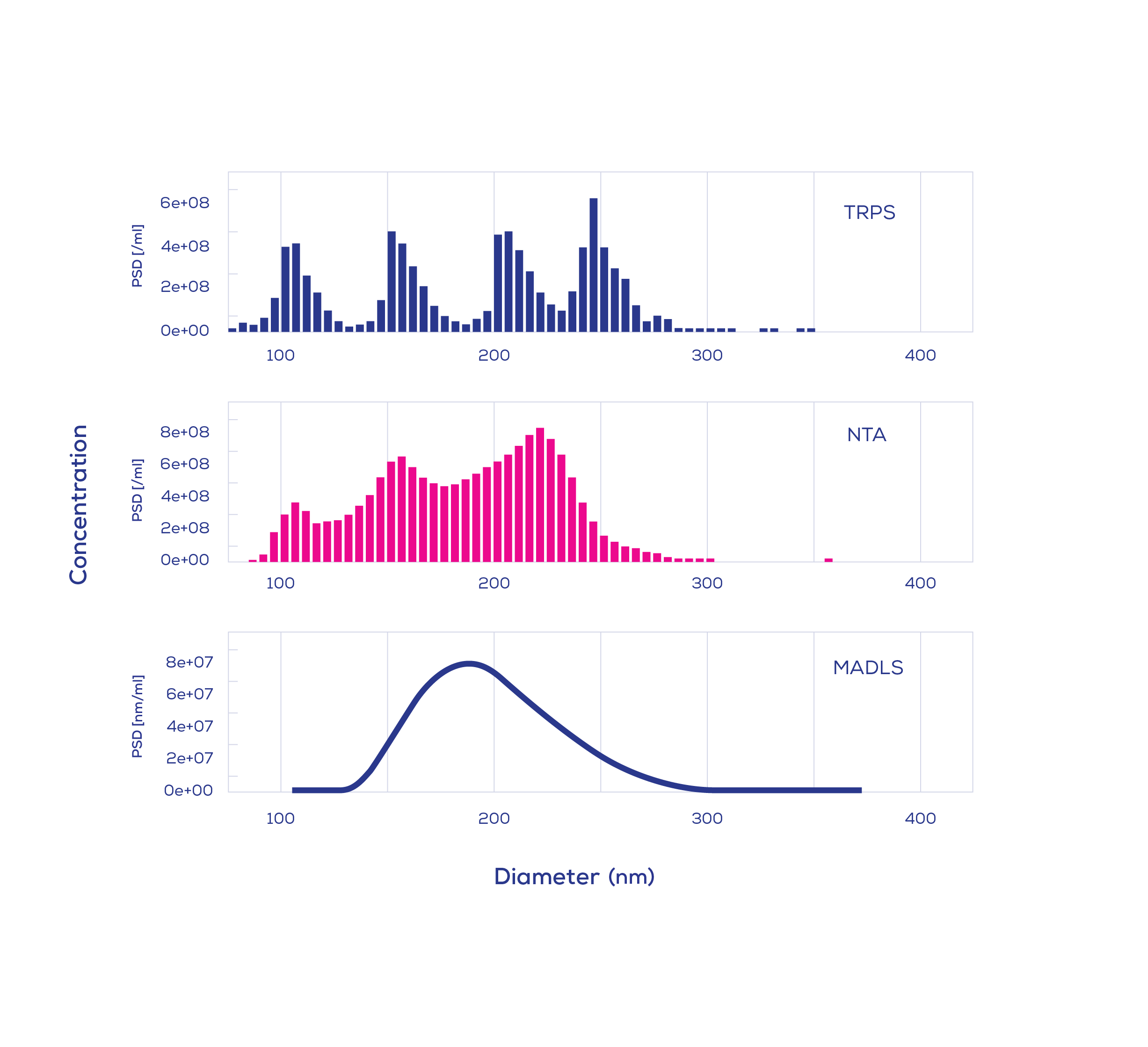
To help you select a suitable method for your research, we identified three key questions that get to the core of what’s important for characterising nanoparticles.

How is TRPS used to derive EV characteristics? How has a post-processing protocol created new possibilities for zeta potential analysis? Find out in this wrap-up of the ISEV2021 presentation by Dr. Priscila Dauros-Singorenko.

Attending ISEV 2021? Here are a few pointers on what to expect, and how to get the most out of this virtual event.
In brief: a summary of work by Vogel et al. (2021), who compared six methods for nanoparticle analysis, and assessed their capabilities using synthetic and biological nanovesicles of varying complexity.

To strengthen the analysis of nanoparticle size, concentration, and charge, Izon Science has released the Exoid – a new-generation Tunable Resistive Pulse Sensing (TRPS) technology.
Dr Gwennan André-Grégoire is a researcher affiliated with the Integrated Center for Cancerology (ICO), working in the Cancerology and Immunology Research Center Nantes-Angers (CRCINA), a public laboratory. Her current position in the Signaling in Oncogenesis, Angiogenesis and Permeability (SOAP) group—led by Dr Julie Gavard—follows a PhD and postdoctoral position in Paris, and previous postdoctoral position in the SOAP group.

A robust antibody titer is essential in preventing lung lesions associated with Actinobacillus pleuropneumoniae (App) – as discussed in this interview with Dr. Fabio Antenucci, University of Copenhagen.

If you are yet to join the high-definition revolution, we recommend you read these three studies that harness the accuracy of TRPS measurements.

Exploring the changing landscape of cannabis legislation in the US: implications for the biopharma sector.
A 2017 study published in Reproductive Biology report a new method which uses qEV columns to isolate exosomes from bovine milk.

The qEV100, a size exclusion chromatography column capable of running 100 mL samples, has been released to meet the growing need for scalable, EV isolation solutions.

In 2015, results from a large-scale trial demonstrated the reproducibility of SEC isolation and TRPS measurement using qEV columns and the qNano.

Continuing advances in the EV field and the discovery of new types of nanosized particles (e.g. exomeres), has led to researchers wanting more specific and precise EV isolation methods.

A wrap-up of a conversation with Dr. Maja Mustapic, Staff Scientist at the Kapogiannis Laboratory, Laboratory of Neurosciences, National Institute on Aging (NIA).

A reflection of the 7th annual meeting of the American Society for Exosomes and Microvesicles, held at Pacific Beach, California. Key themes included cancer metastasis and EV isolation methods.

In this interview, Dr de Gracia Lux from UT Southwestern Medical Center discusses the pursuit of phase change perfluorocarbon nanodroplets for diagnostic and therapeutic applications.

Izon’s qEV columns harness size exclusion chromatography (SEC) to provide a rapid and effective method for the isolation of exosomes and other extracellular vesicles.

Two researchers from the Paris Cardiovascular Research Centre, Dr. Pierre-Michaël Coly and Stephane Mazlan, discuss how they are decoding the role of EVs in cardiovascular health.
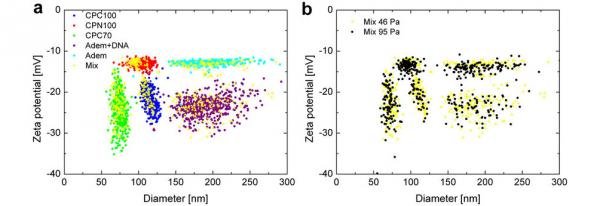
An extract from an important paper on single particle charge measurement, published in Scientific Reports.

Extracellular vesicles (EVs) derived from human induced pluripotent stem cells may provide a productive, cell-free alternative for regenerative medicine.

This presentation introduces zeta potential theory, assumptions, and applications, and delves into published work related to TRPS measurements of zeta potential.

Watch this short video to learn about TRPS data reporting tools, which are built on a philosophy that values high-quality measurements on a particle-by particle basis – rather than inferences.

A new era in exosome and extracellular vesicle (EV) isolation starts this week when the first Automatic Fraction Collectors (AFC) for the qEV SEC column range are shipped to beta customers.
In a candid discourse, Dr. John Ludlow, Executive Director (Regenerative Medicine) at ZenBio, Inc., talks about the future of customised exosomes as surrogates in regenerative medicine.

Viruses, EVs, Ebola, and COVID-19 diagnostics: thoughts and reflections from Dr Fatah Kashanchi, Professor and Director at the George Mason University Laboratory of Molecular Virology.

Christoph Metzner, University of Vienna, discusses single-particle characterisation in relation to the field of viral vector research.

In our first video interview below, Dr Priscila Singorenko from the Dept of Molecular Medicine and Pathology at Auckland University discusses her research on the role of Bacterial Membrane Vesicles in Infection.

In this interview, Iraj Aalaei, Center for High-rate Nanomanufacturing at the University of Massachusetts Lowell, shares insights into his nanotoxicology research.
Read on to learn about the potential applications of core-shell nanoparticles with tunable titania shells, within the fields of nanomedicine and opto-electrics.

A wrap-up of a qEV-enabled study which indicated a role for extracellular vesicles in wound healing.


.svg)


-Size_-Approaches-and-Implications-for-Nanomedicine-YouTube.png)

.png)


.png)

.png)
.png)


