


Meet The Pulsoid
A New Era in Nanoparticle Characterisation
High-Resolution Nanoparticle Measurement, Made Simple
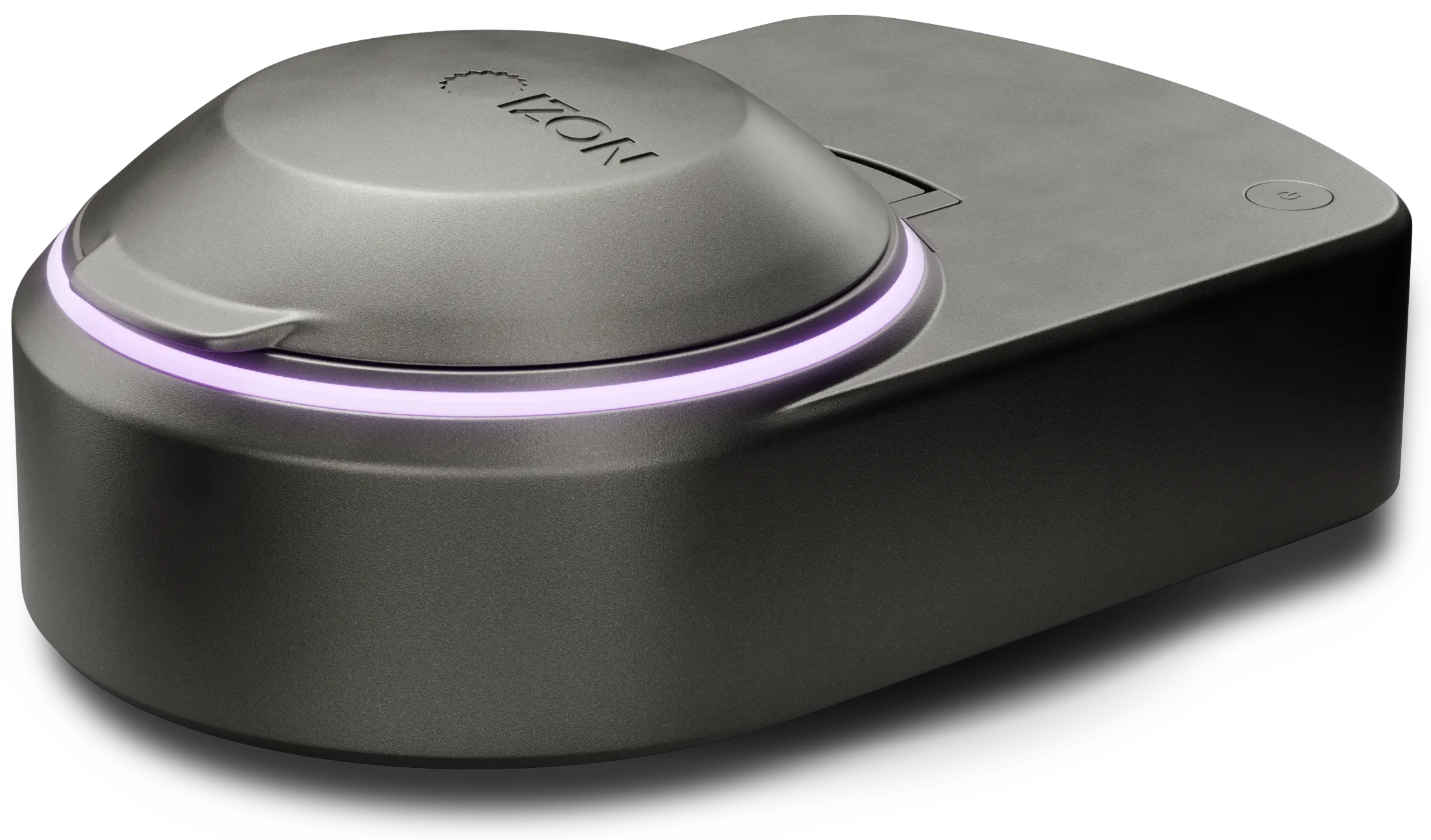
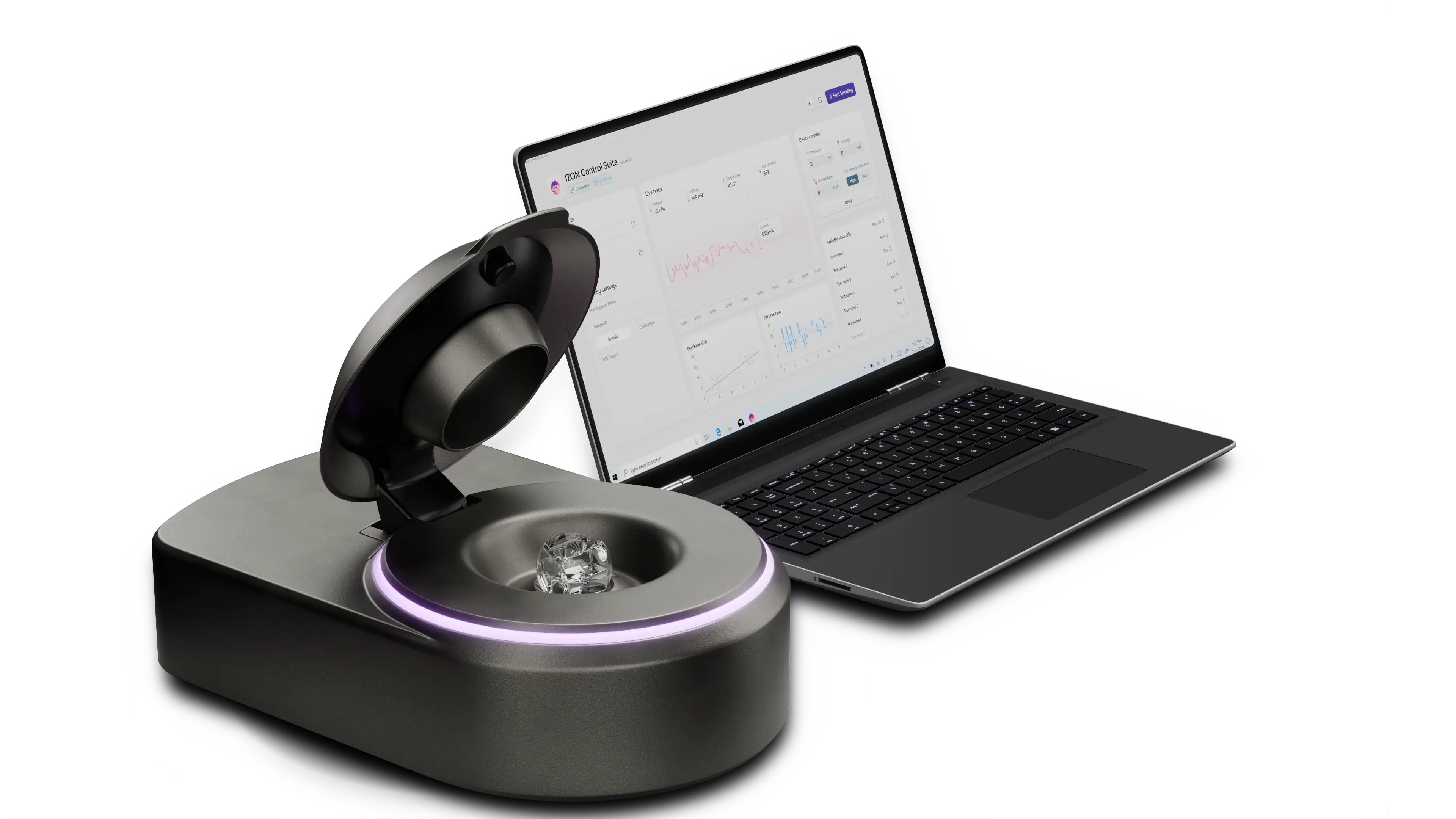
The Pulsoid is Izon’s brand-new nanoparticle measurement system, delivering high-resolution, single-particle insight through a faster, more intuitive workflow.
Powered by Nanopore Pulse Sensing (NPS), the Pulsoid removes the traditional trade-off between measurement performance and usability, making direct measurement of particle size, concentration, and zeta potential more accessible.
.png)
Size, Concentration & Zeta Potential
Single-particle measurement enables direct insight into size, concentration, and surface charge.
.png)
Exceptional Measurement Accuracy
Up to 100% ± 2%¹ size accuracy, enabled by a solid-state silicon nanopore.
.png)
High Throughput, Easy To Learn
Fast, repeatable measurements with a low learning curve.
See What Ensemble Methods Miss
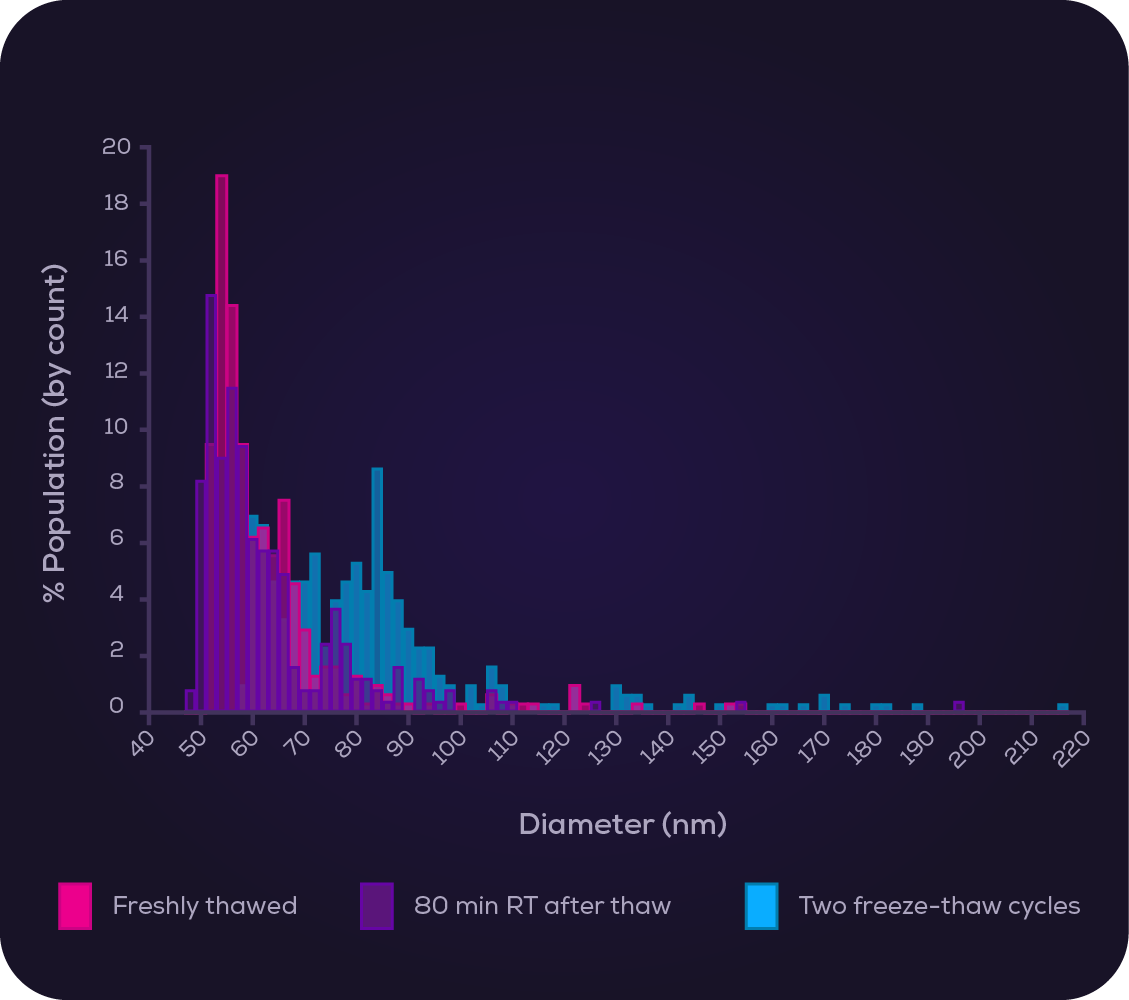
Ensemble techniques report averages - but important differences between particles can be hidden beneath them.
The Pulsoid provides particle-by-particle insights, allowing you to explore distributions, heterogeneity, and subtle population differences that may otherwise go undetected.
Exceptionally Accurate Size Measurement
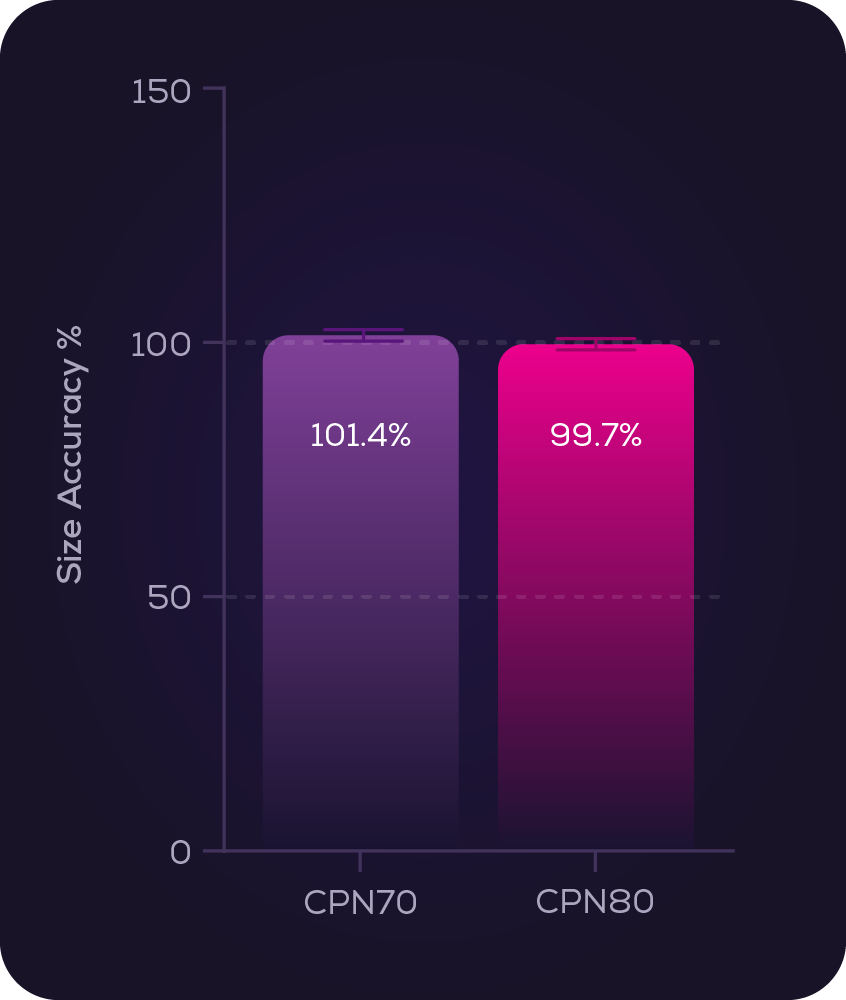
Access high-resolution measurements of size and concentration, with TEM-level size accuracy¹.
The precision and consistency of solid-state nanopores enable accurate measurement of small particles from 40 nm and above. Size accuracy is exceptionally high, demonstrated by 99.7% agreement with TEM for NIST-traceable polystyrene standards. Single-particle analysis ensures the Pulsoid maintains accuracy even when analysing polydisperse samples.
High-Throughput, Easy to Learn
A solid-state silicon nanopore housed in an easy-to-clean fluid cell reduces handling, maintenance, and calibration between runs. The result is faster workflows and higher throughput.
With a simplified setup and fewer opportunities for user error, the Pulsoid requires only a fraction of the setup time of the Exoid and delivers around double2 the throughput. It also offers a significantly lower learning curve and more consistent results across users.
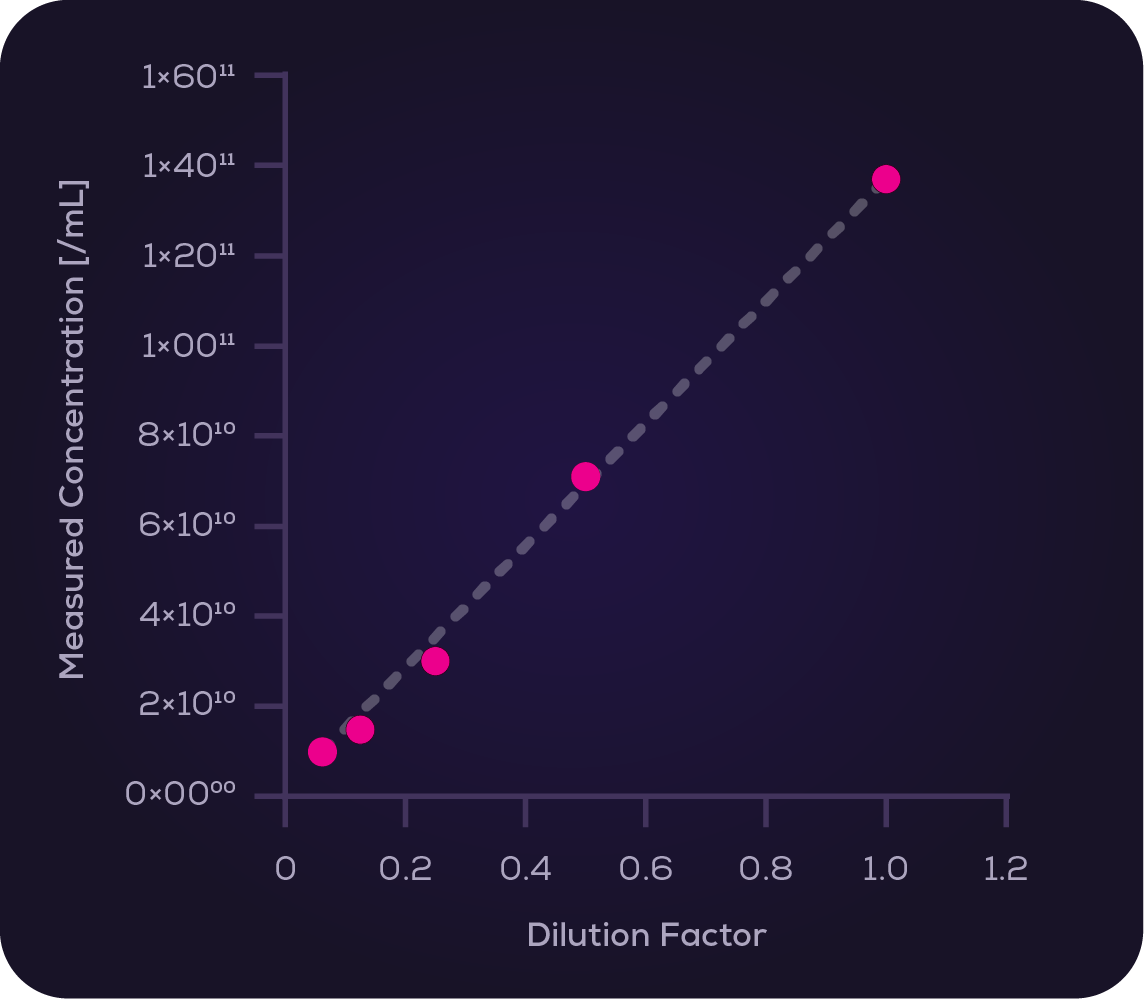
True Particle-Count–Based Concentration Measurement
The Pulsoid measures concentration by directly counting individual particles, delivering a linear response across a wide concentration range of 10⁹ to 10¹² particles per mL.
This ensures measured changes reflect real differences in particle number, not artefacts, making the Pulsoid well suited to formulation work, process monitoring, and comparability studies.
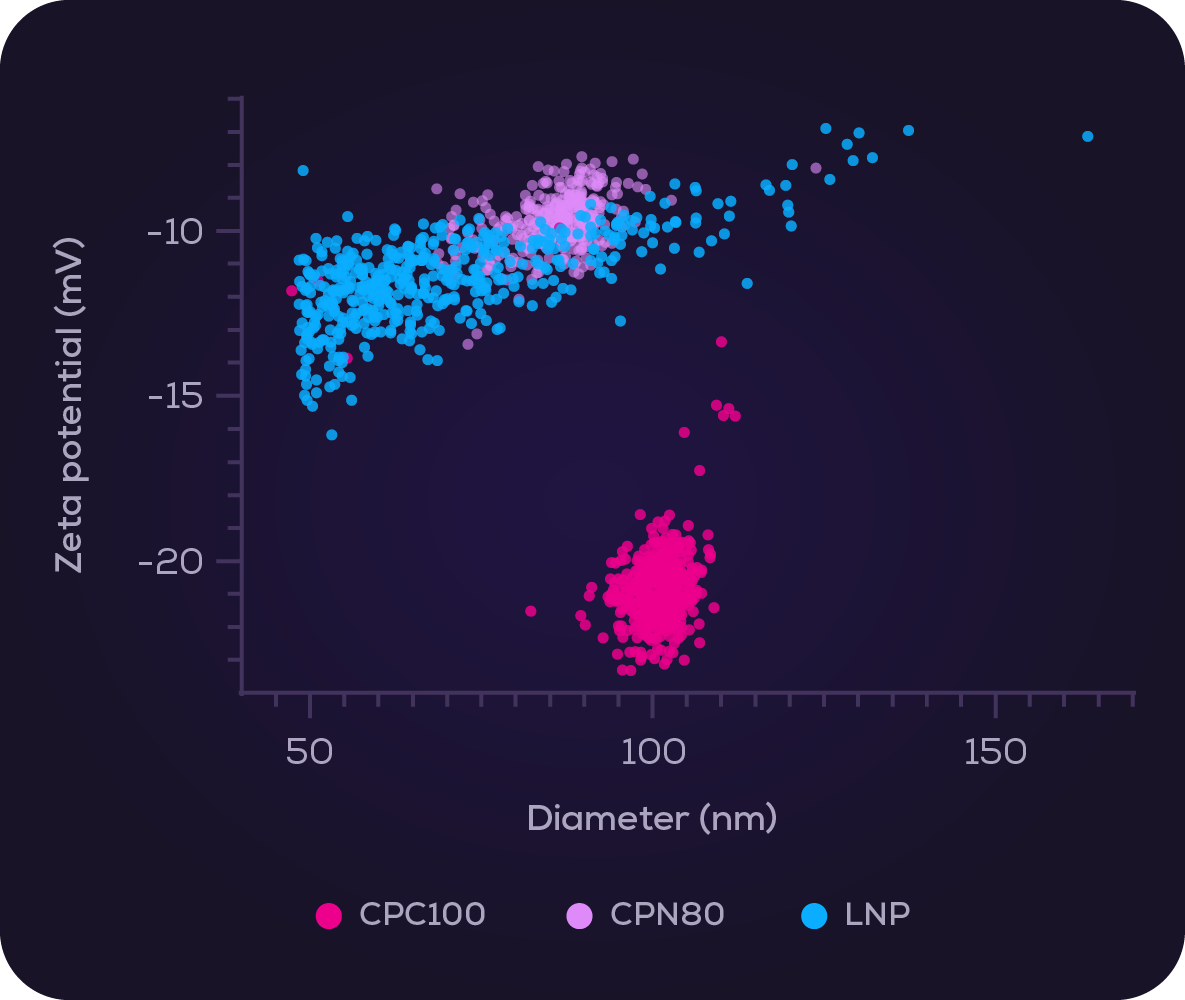
Direct, Single-Particle Zeta Potential
The Pulsoid measures particle size and zeta potential simultaneously on a particle-by-particle basis, revealing surface charge detail that ensemble techniques average away.
Resolving charge distributions and subpopulations provides clearer insight into formulation behaviour, stability, and process-related changes, particularly for heterogeneous samples.
A New Solid-State Nanopore Chip at the Core
At the heart of the Pulsoid is a precision-manufactured silicon nanopore chip. Its fixed pore geometry delivers consistent, repeatable single-particle measurements with the resolution required for high-quality nanoparticle analysis.
As particles pass through the nanopore, brief changes in ionic current are measured. Signal magnitude correlates with particle size, event frequency reflects concentration, and event duration enables zeta potential measurement. The result is highly detailed, particle by particle characterisation.
Optimised for LNPs and Beyond
The Pulsoid is designed for lipid nanoparticles and other nanoscale particle types used in biological and therapeutic research. High-resolution, single-particle analysis helps detect subtle changes caused by aggregation, instability, storage conditions, or processing effects.
With access to size, concentration, and zeta potential data, you can build a clearer picture of particle behaviour and stability over time.
