Gain Deeper Insights with High-Precision Zeta Potential Measurement
Measure zeta potential with high accuracy at the single-particle level using Izon’s nanopore-based systems. Izon offers two complementary approaches: Tunable Resistive Pulse Sensing (TRPS) for maximum flexibility and control, and Nanopore Pulse Sensing (NPS) for a faster, more streamlined workflow. Both systems measure zeta potential directly on individual particles, delivering deeper insight into charge distributions and sample heterogeneity than ensemble techniques.

Obtain an accurate view of charge distribution through particle-by-particle zeta potential analysis.
Measure zeta potential and particle size on the same individual particles, enabling more informed assessment of stability, aggregation, and formulation behaviour.
Choose the system that fits your workflow. TRPS is designed for maximum control and depth, while NPS delivers fast, standardised, high-resolution measurements.
What is Zeta Potential?
Zeta potential is an important parameter used in particle characterisation to gauge surface charge and the stability of colloidal solutions.
Defined as the electrical potential at the slipping plane of the interfacial double layer, zeta potential represents the magnitude of the electrostatic repulsion or attraction between particles.
Zeta potential analysis is used to assess sample and product stability across a range of applications involving nano-sized particles, including in nanomedicine and extracellular vesicle research.


How Do Izon’s Systems Measure Zeta Potential?
Izon’s systems measure zeta potential by tracking the electrophoretic motion of individual nanoparticles as they pass through a nanopore under an applied electric field. Each particle generates a resistive pulse that contains information on both size and zeta potential.
TRPS uses a tunable polymer nanopore for flexible measurement across particle types, while NPS uses a precision solid-state nanopore chip to deliver the same single-particle measurements in a faster, more streamlined workflow.
Distinguish Nanoparticle Subpopulations with High-Resolution Insights
TRPS and NPS deliver high-resolution, single-particle measurements that enable precise sample comparison and detection of subtle shifts in zeta potential linked to particle stability. By measuring size and zeta potential simultaneously, both systems provide the granularity needed to resolve distinct subpopulations within heterogeneous and multimodal samples.


Obtain Valuable Single-Particle Measurements, Not Averages
Both TRPS and NPS measure zeta potential on a particle-by-particle basis, revealing charge distributions and distinct sub-populations that are hidden by ensemble techniques such as PALS. By avoiding averaged results, Izon’s nanopore-based systems provide more detailed and actionable insight into sample heterogeneity, stability, and formulation behaviour.
Choose the Right Tool for Your Workflow
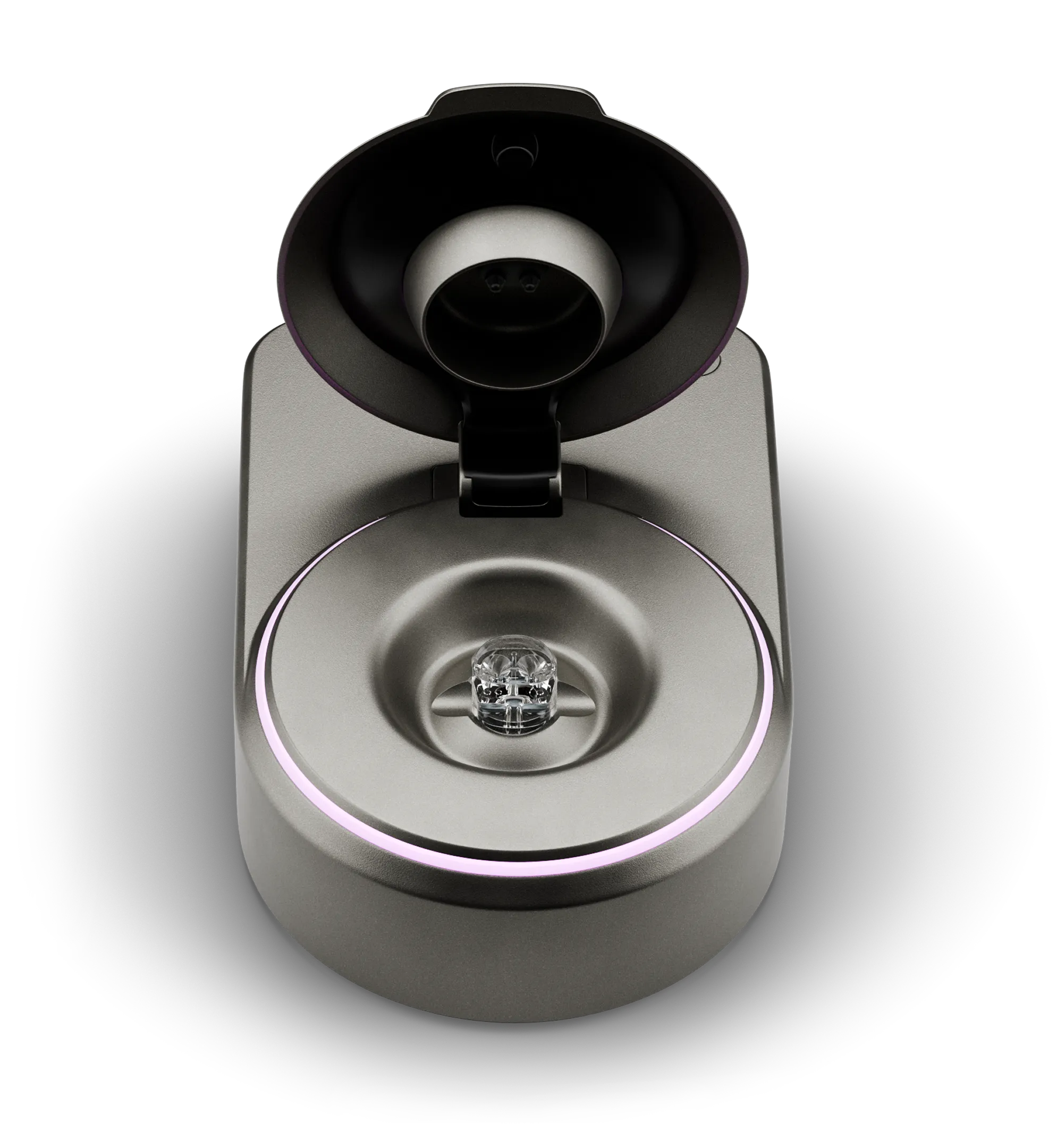
The Pulsoid
For teams who want fast, standardised, high-resolution measurement for defined nanoparticle workflows.
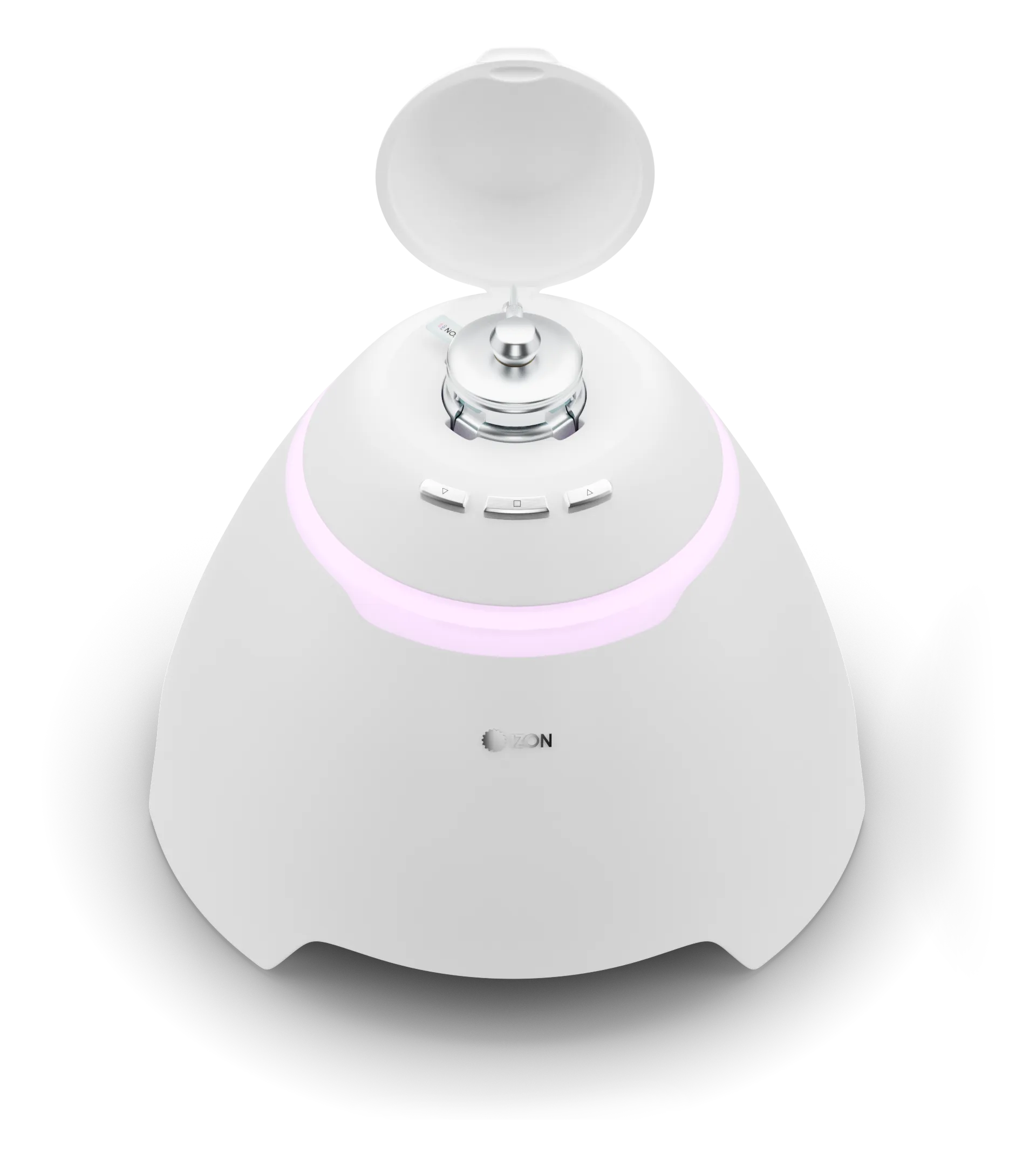
The Exoid
For researchers who want maximum control, flexibility, and depth across diverse nanoparticle types.