

The science behind advanced regenerative therapies has come a long way. But what will it take to get these complex medicines to the patients who need them? That question is being addressed by the establishment of the Solutions for Manufacturing Advanced Regenerative Therapies Cooperative Research Centre (known as the SMART CRC), which exists to accelerate the availability and adoption of regenerative therapies in Australia and globally.
Izon has joined SMART CRC as a partner united by a shared goal: helping bring new therapies through to manufacture and into clinical use. The collaboration opens new pathways for Izon to work closely with those on the nanomedicine development frontline, accelerating the development of real-world applications.
Building the ecosystem advanced therapies need
Launched in October 2025, the SMART CRC is a $238 million (AUD) national initiative that brings together industry, researchers, government and clinicians to deliver tangible solutions to improve lives.
SMART CRC CEO Professor Simon Cool said the SMART CRC is working with partners and associates to bring a 10-year pipeline of life-changing therapies to market.
“The SMART CRC exists to accelerate the translation of therapies that improve lives. Through our industry-led model and with more than 70 industry, research, clinical and government partners we are focused on the tangible needs across the regenerative therapies sector.”
By facilitating collaborative opportunities across industry, universities, medical research institutes, and health services, SMART CRC is creating an industry-led ecosystem designed to move therapies into the clinic faster. And ‘ecosystem’ truly is the right word to describe what biopharmaceutical production demands. Advanced therapies, including cancer vaccines and cell and gene therapies, face many challenges: scaling manufacture while maintaining quality, navigating evolving regulatory frameworks, and ensuring the right clinical infrastructure is in place to receive and administer them. None of these challenges can be solved in isolation, and progress should only be faster if the people for the job are connected.
The Adelaide showcase: supply chain session
In pursuit of productive conversations, collaborations, and tangible progress, SMART CRC hosts a calendar of national, in person events and opportunities to connect across the eco-system. The recent Showcase in South Australia included a dedicated supply chain session. Izon Science was one of three partner organisations invited to present to representatives from across the centre’s ecosystem.
One concept in ecology is that of ‘scale’, where ecologists break down both spatial scale and temporal scale to get a sense of processes and patterns. Looking at the speaker line-up, we couldn’t help but notice the contrast. Izon was up first, with CEO Hans van der Voorn presenting on behalf of a company now in its 21st year, backed by a focused team of around 53 people. Then there was the Merck Group – the global entity that has racked up 350 years in business with more than 60,000 employees worldwide. Alithia Life Sciences rounded out the line-up, as an Australian-owned CRO bringing a new perspective to the room.
But maybe that contrast is the point. Ecosystems thrive on contributors of all sizes, each addressing a different part of the problem. For Izon specifically, that means tackling bottlenecks in nanoparticle isolation and characterisation across R&D, bioprocessing optimisation, and manufacturing quality control. Being small in size doesn’t equate to a small impact – and in nanomedicine, it never has.
Beyond the official programme
Beyond the centre's official projects, one of SMART CRC's real strengths is the informal collaborations it creates the conditions for. Those conversations were in full swing from the start, with Izon’s APAC business development team joining Hans for subsequent meetings throughout the visit. The team left with no shortage of ideas about where Izon’s measurement capabilities could go next. In a global climate where science funding news often feels grim, there’s something encouraging about being part of an initiative that backs commercial organisations bringing advanced medicines into clinical use.
“There is no equivalent of SMART CRC in New Zealand, which makes cross-Tasman and international partnerships all the more valuable," says Hans van der Voorn, CEO. "SMART CRC creates the conditions for the kind of informal conversations that can lead to productive collaborations."
Izon is headquartered in Christchurch, New Zealand – with subsidiaries in the U.S. and France, but not in Australia. In that sense, SMART CRC has been genuinely inclusive in bringing Izon into the fold, and it speaks to the centre's philosophy: impact doesn't stop at borders, and neither should collaboration.

Izon’s place in the ecosystem
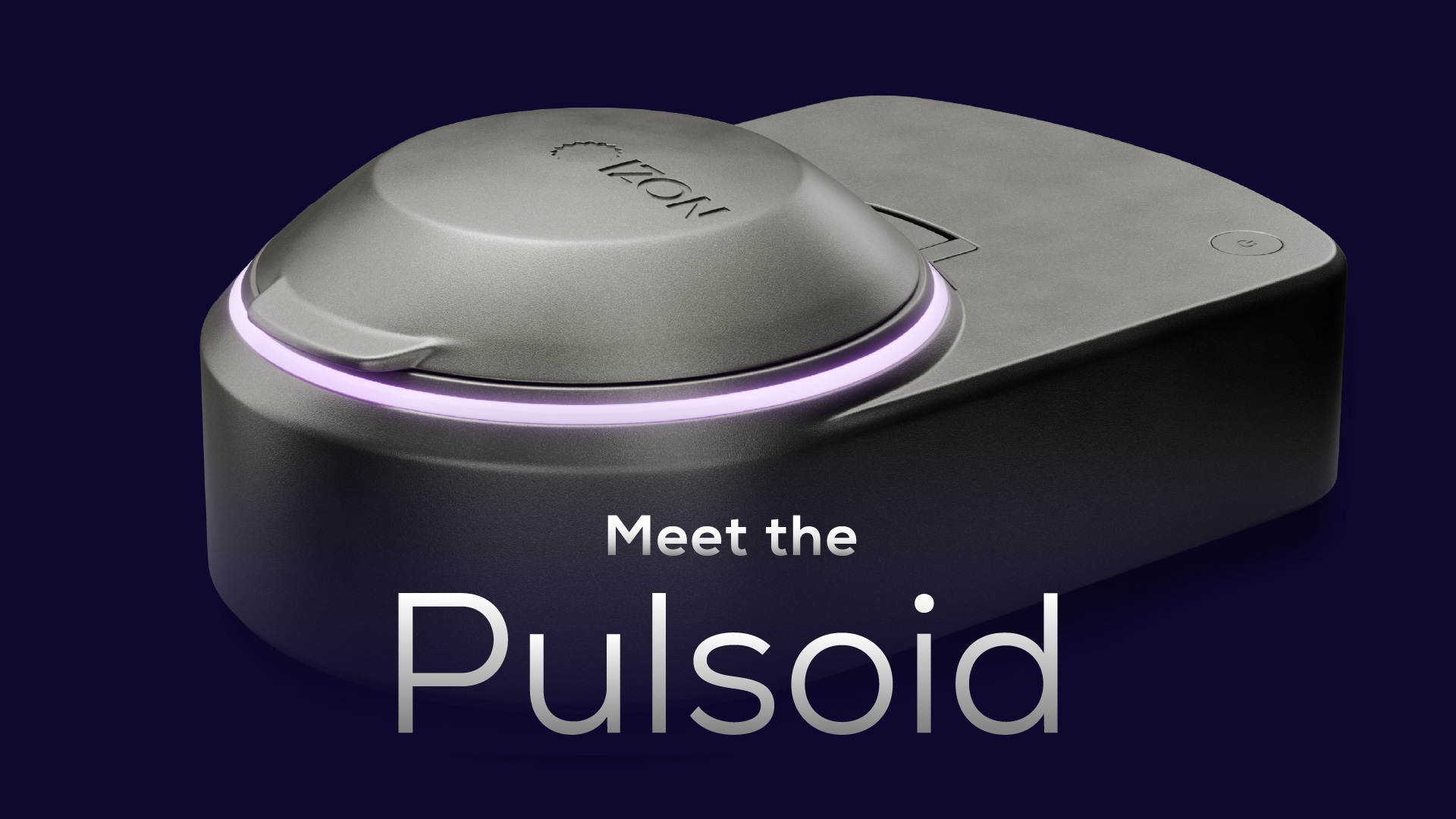
Izon plays two central roles in SMART CRC's mission: giving researchers the tools to isolate particles of interest and measure them with the precision nanomedicine demands. The recent Pulsoid release marks a turning point, bringing ease-of-use to high-throughput settings where high-resolution measurement was previously impractical.
Izon's isolation expertise spans 30+ years of collective bioprocessing experience across EV diagnostics, EV-based therapeutics, and basic science – knowledge that extends to purifying other nano-sized particles relevant to nanomedicine.
So, what will it take to get complex medicines to the patients who need them? There’s no single answer. Perhaps a better question is: what does progress look like?
Progress looks like a centre that brings the right people together, a supply chain session in Adelaide, and tools precise enough to isolate and characterise the particles that matter.
Progress, it turns out, is a collective effort, and Izon is glad to be a part of it.