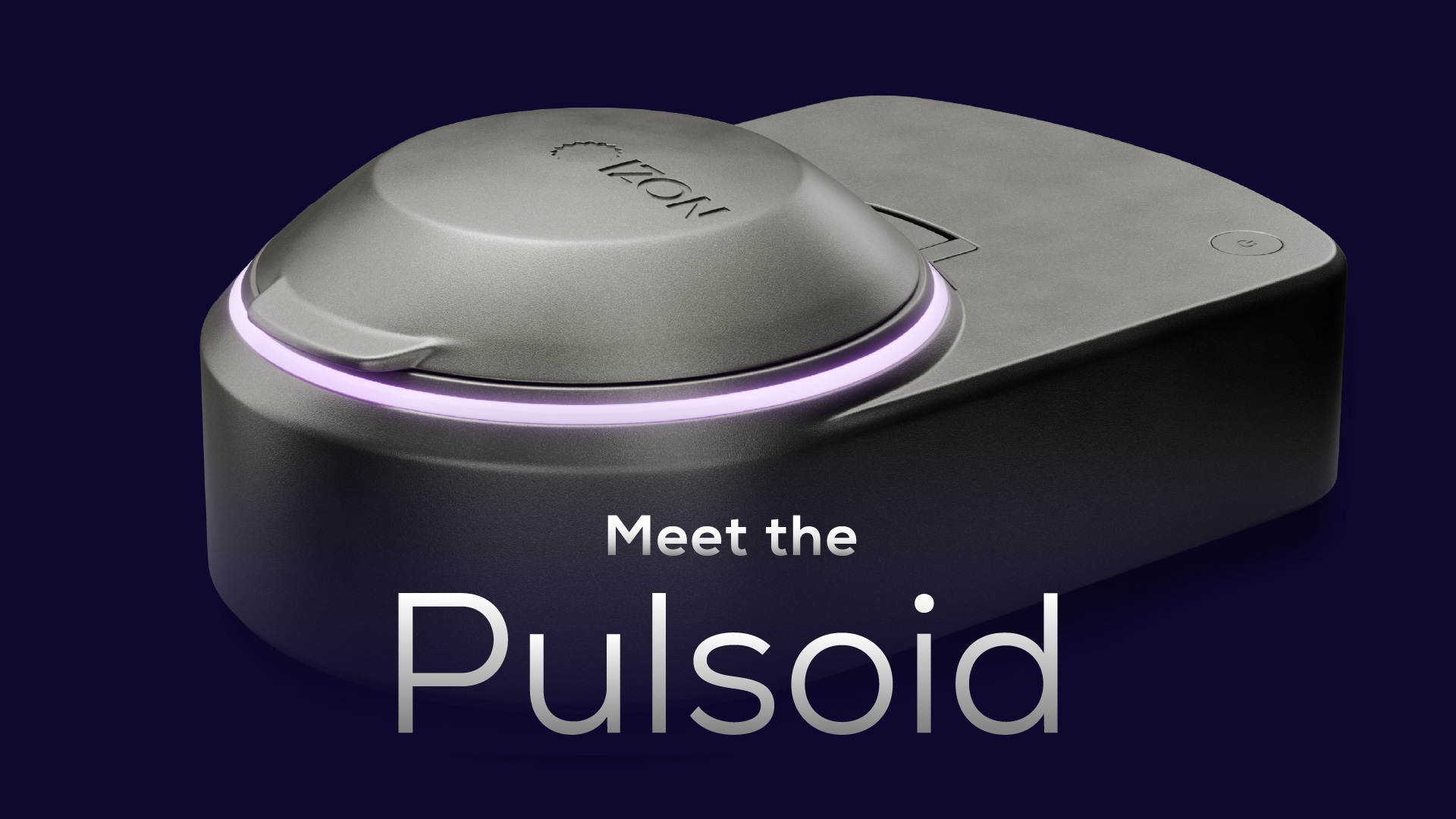


Today, we’re announcing the Pulsoid, a new particle measurement system that removes the historical trade-off between accuracy and usability. Designed around a silicon chip-based nanopore, the Pulsoid introduces a new RPS technique we call Nanopore Pulse Sensing (NPS). For the first time, high-resolution, single-particle analysis is delivered in a fast, streamlined workflow.
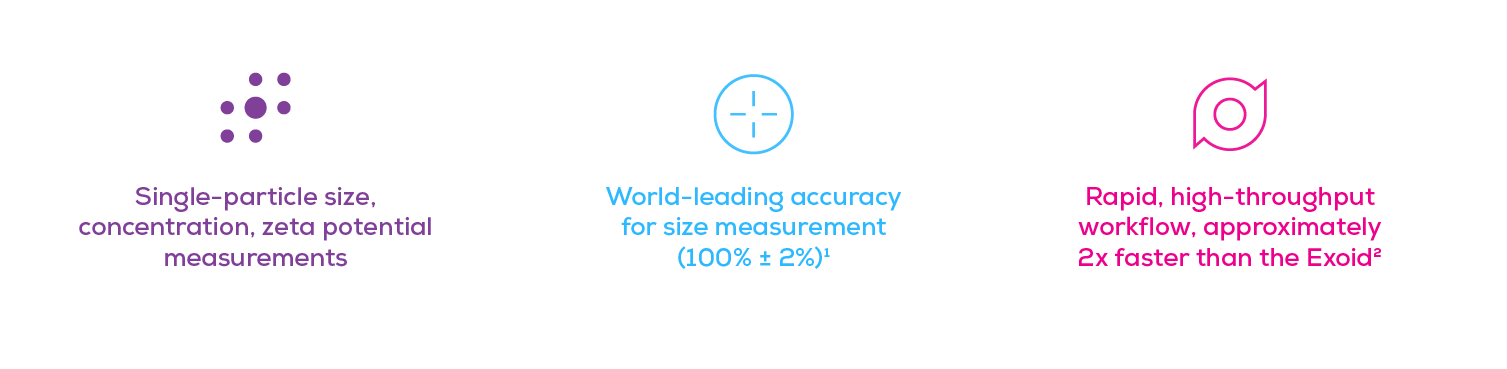
Key stats
Building on a proven foundation: Lessons from TRPS
Our original measurement platform, Tunable Resistive Pulse Sensing (TRPS), is known for its high accuracy and resolution but has a steep learning curve. After selling around 1000 TRPS instruments, we’ve learned a great deal from how it has been used in practice.
While we continue to believe that high-quality particle data is worth some effort, we also recognise that measurement throughput and ease of use are important factors. The Pulsoid was designed with those realities in mind. For the first time, we are offering a particle analysis methodology that delivers very accurate and high-resolution measurements in a system that is fast and straightforward to use.
A solid-state nanopore chip at the core
In contrast to TRPS, which uses a flexible, tunable polymer nanopore, NPS uses a solid-state silicon nanopore chip. The chip is fixed in size and manufactured with extreme precision and consistency, enabling a simpler, faster user experience with fewer calibration steps across multiple measurements, while maintaining the detail and resolution of single-particle analysis.

Exceptional size measurement accuracy
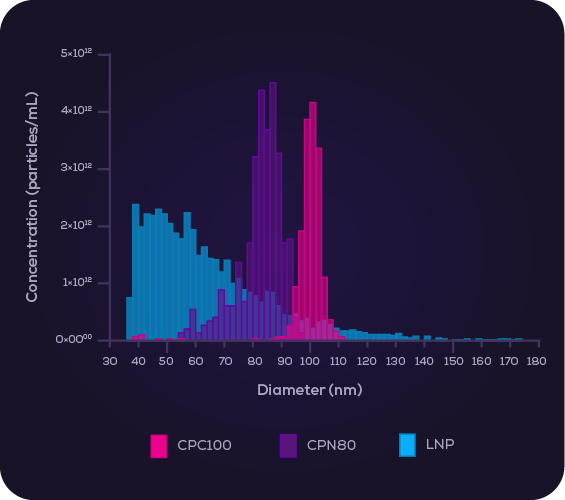
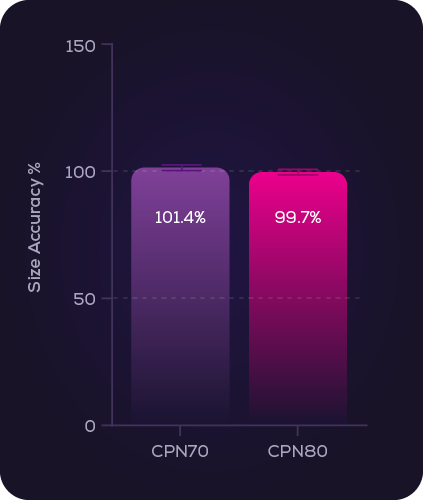
The precision and consistency of solid-state nanopores enable incredibly accurate measurement of small particles from 40 nm and above, with smaller size ranges currently in development. Size accuracy is exceptionally high, as demonstrated by the 99.7% agreement with TEM shown below. Rapid single-particle analysis ensures the Pulsoid maintains accuracy even when analysing polydisperse samples.
True particle-count–based concentration measurement
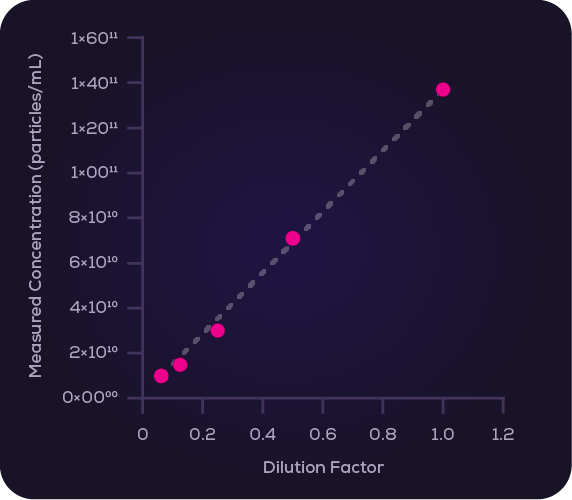
The Pulsoid concentration measurements are based on particle counts and scale linearly with dilution, confirming accurate particle-by-particle counting across a wide concentration range, currently 109 to 1012 particles/mL. This predictable response provides confidence that measured changes reflect true differences in particle number, not measurement artefacts, making the system well suited to formulation, process monitoring, and comparability studies.
Direct, single-particle zeta potential analysis
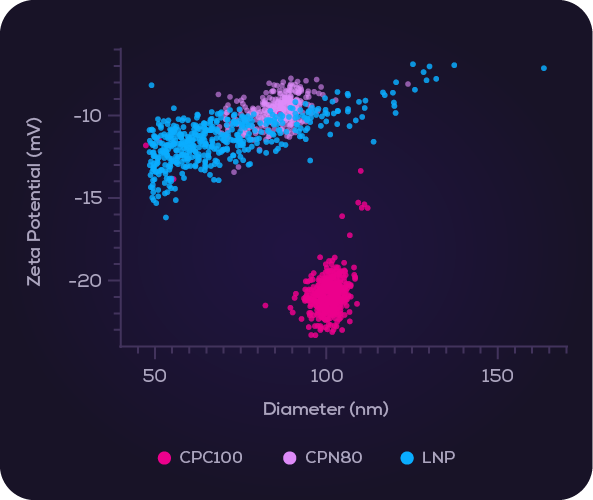
The Pulsoid measures particle size and zeta potential (which is a measure of surface charge density), simultaneously on a particle-by-particle basis. This delivers far more precise, high-resolution data than ensemble techniques such as PALS, particularly for heterogeneous samples. By measuring charge directly at the single-particle level, the Pulsoid provides clearer insight into charge distributions and subpopulations that are otherwise obscured by averaged measurements.
Designed for high throughput and ease of use
We set out to develop the most capable and easiest to use single-particle measurement system available. Every aspect of the system was designed with throughput in mind. The transparent fluid cell that houses the chip is easy to clean, and while the chip is user-loaded at launch, it is intended to become a single consumable item in the near future. This approach reduces handling time and sanitisation requirements. Beyond the fluid cell, the system requires minimal routine maintenance or cleaning.
The fixed, solid-state nature of the silicon chips also reduces the need for repeated calibration when processing multiple samples, and we are testing a calibration-free approach with the aim of removing this step entirely. While we continue to work towards a fully plug-and-play solution, the Pulsoid Beta already requires only a fraction of the setup time compared with the Exoid.
In addition to higher throughput, the Pulsoid has a much lower learning curve than the Exoid, with fewer opportunities for user error and reduced between-user variability.
Sample preparation and purity are important for accurate particle measurement on any system, and ease of use can vary depending on the sample.
Monitoring change
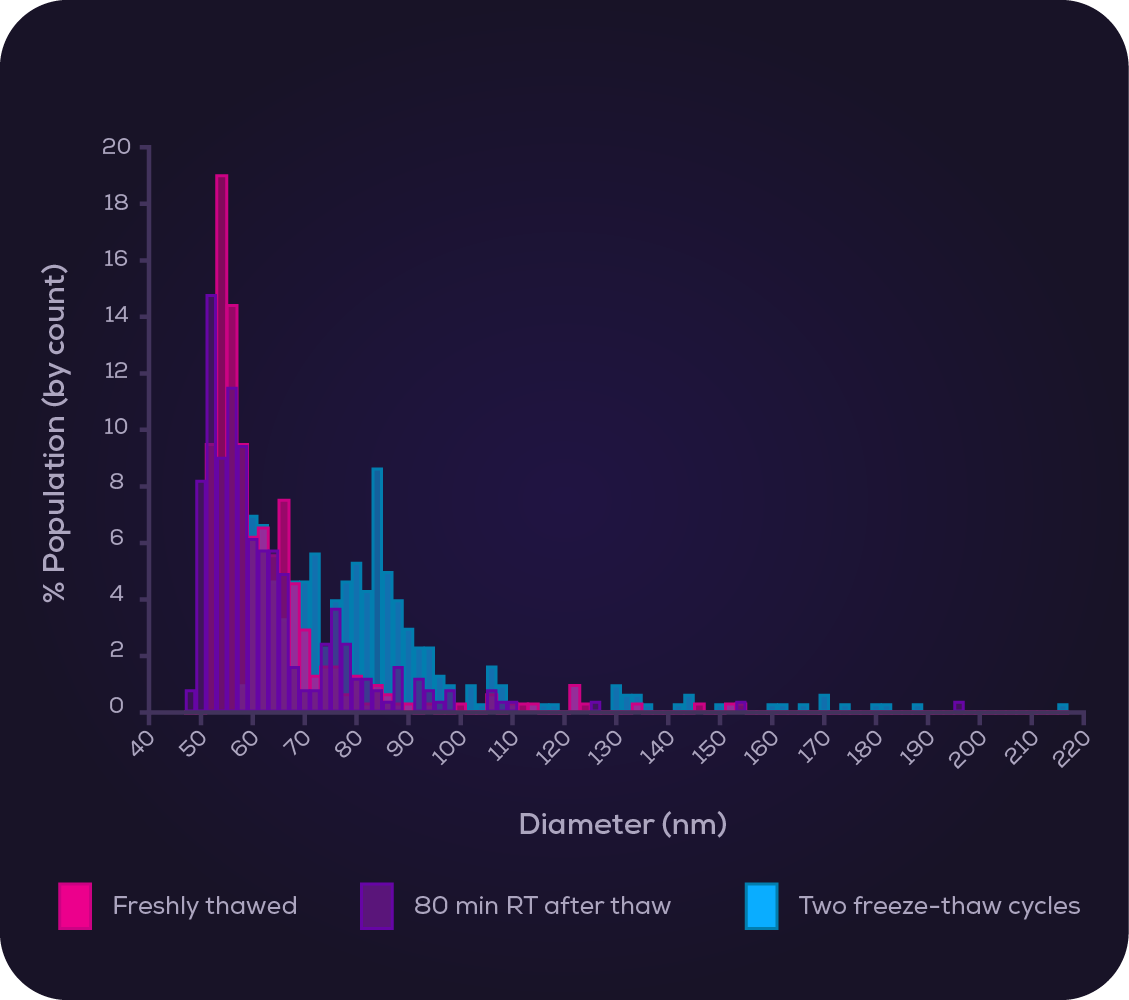
High resolution combined with high accuracy allows you to detect small, potentially rapid changes that ensemble techniques cannot resolve. These changes may arise from aggregation, contamination, instability, or bioprocessing issues. Crucially, monitoring change is not limited to particle size. Meaningful insight requires tracking particle concentration and zeta potential alongside size, as all three can shift independently and signal different underlying issues.
Optimised for lipid nanoparticle applications
The launch of the Pulsoid marks an important step forward in nanoparticle analysis, and this is only the beginning.
From the outset, the Pulsoid is focused on addressing the immediate needs of researchers working with lipid nanoparticles in drug delivery and gene therapy, where access to reliable, high-resolution data is essential.
At the same time, its underlying methodology supports a much broad errange of applications across nanoparticle research, wherever detailed insight into particle size, concentration, and charge is required. We look forward to exploring these opportunities alongside researchers working across diverse particle types and applications.
Beta packages are now available for early access, with discounted pricing for participating researchers. To learn more about the Pulsoid, discuss beta access, or arrange a demo with your samples, we invite you to get in touch with our team.
For more information visit the Pulsoid page.