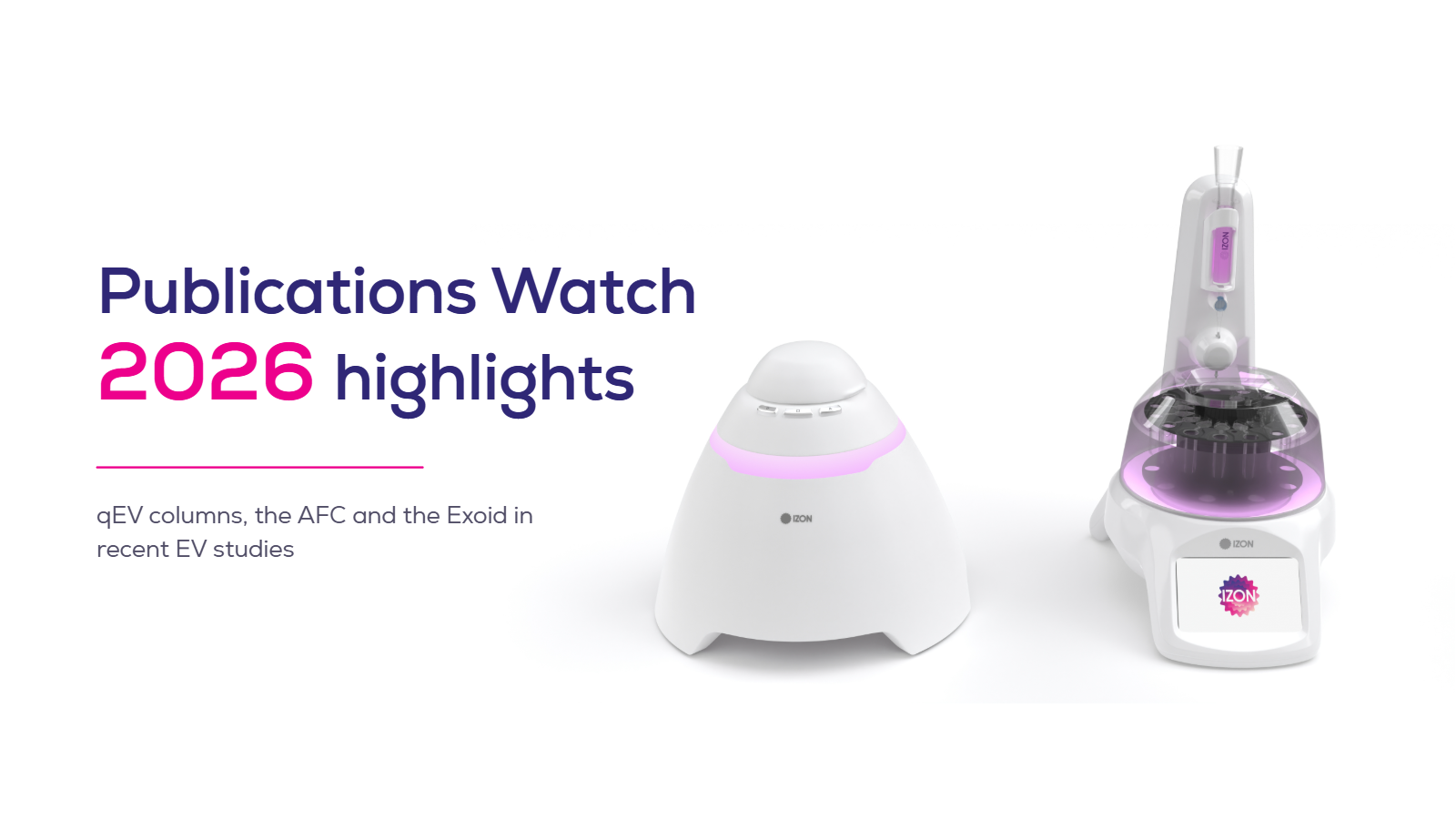
Publication Watch: 2026 So Far
From lymphoma liquid biopsies to wasp venom, six 2026 studies show how qEV columns, the AFC and the Exoid helped researchers isolate and characterise EVs.
Read more

Keep up with the latest Extracellular Vesicle, Virus and Nanomedicine news and research publications.

Publications featuring Tunable Resistive Pulse Sensing (TRPS) from Q3, 2022.

A comparison of 5 isolation methods for milk extracellular vesicles: a summary of the findings of Morozumi et al. 2021.

The qEV isolation platform continues to contribute to high quality research, as seen in publications from Q3 2022.

Cerebrospinal Fluid presents unique challenges for EV isolation, which has been reflected in a lack of reproducibility in research.

Isolation of brain derived EVs from the circulation and the cerebrospinal fluid is important in the search for biomarkers for neurological diseases. However, the long-held marker, L1CAM, has recently been called into question. Here we discuss the evidence for and against L1CAM as a marker of neuronal EVs.

The methods you use for blood collection and processing will impact on the EVs that end up in your isolated sample. Here we discuss the evidence to help you make the right decisions for your research.

Size exclusion chromatography is a gentle method for isolating pure, intact and functionally active extracellular vesicles. Here we discuss the pros and cons of SEC and other EV isolation techniques.

Interested in using the qEV10 in your research? Here we highlight some of the best examples of research using qEV10 columns published to date.

Isolation, function, and potential future uses of extracellular vesicles derived from milk – a complex and commonly overlooked biofluid.

The qEV Gen 2 range just got bigger: qEV100 joins the Gen 2 range.

qEV isolation continues to enable diverse studies on extracellular vesicles.


