HOW qEV COMPARES
Not All SEC Columns Are Built the Same.
qEV Gen 2 columns use Izon-exclusive SEC resin to deliver higher EV purity and recovery than columns using off-the-shelf resins. Manufactured under ISO 13485, they underpin the world’s most established and scalable EV isolation platform.
~99% protein removed
qEV Gen 2 columns gently remove approximately 99% of soluble protein from human plasma.
Higher EV recovery
Purity gains without a recovery trade-off: Gen 2 recovers significantly more EVs than comparable columns.
Built for clinical translation
Consumable qEV columns are manufactured under a quality management system certified to ISO 13485:2016, with GMP-ready columns available.
Get the Purest EV Isolates Possible
qEV Gen 2 columns, built using Izon-exclusive SEC resin, deliver significantly higher EV purity than columns using standard market resins (CL-4B and CL-2B) — resins Izon's own Legacy columns also once relied on.
qEV Gen 2 columns gently remove ~99% of soluble protein from human plasma.
Maximise EV Recovery
When developing the qEV Gen 2 column range, we engineered every aspect of the design for EV isolation, including an exclusive resin optimised specifically for extracellular vesicles.
The result is significantly higher EV recovery than comparable SEC columns.
Lipoprotein Depletion, Covered
qEV Gen 2 columns remove the vast majority of lipoproteins from human plasma — without a separate binding resin step.
That means a cleaner isolate, without the recovery trade-off that comes with dual-mode chromatography. We tested that approach years ago and moved away from it: binding resins strip out lipoproteins, but at the cost of losing EVs along with them.
Remove ~99% of ApoB with all qEV columns, and achieve >99.99% removal of ApoA1 with the 70 nm series.
What About the 20 nm Series?
Our 20 nm range launched after Gen 2, extending isolation down to smaller EV populations. Since it wasn't part of the original Gen 2 resin upgrade, it isn't included in the comparisons above — but you can see its purity and recovery data on the dedicated qEV Series comparison page.
Built for Clinical Translation
qEV column production has been refined through a precise, proprietary packing technique and protocols guided by a quality management system certified to ISO 13485:2016. For clinical and cGMP workflows, our GMP-ready qEV columns take that consistency further:
- Manufactured under rigorous quality control, with Certificates of Analysis documenting compliance
- Column filling uses aseptic methods, with final sanitisation steps to control bioburden and endotoxin levels
- Made to order, and paired with qEV Automation models for cGMP environments
Start a Conversation About Your Research
A Platform That Scales With You
EV workflows grow in two directions, demanding either more samples or larger volumes. The qEV platform scales to meet both.
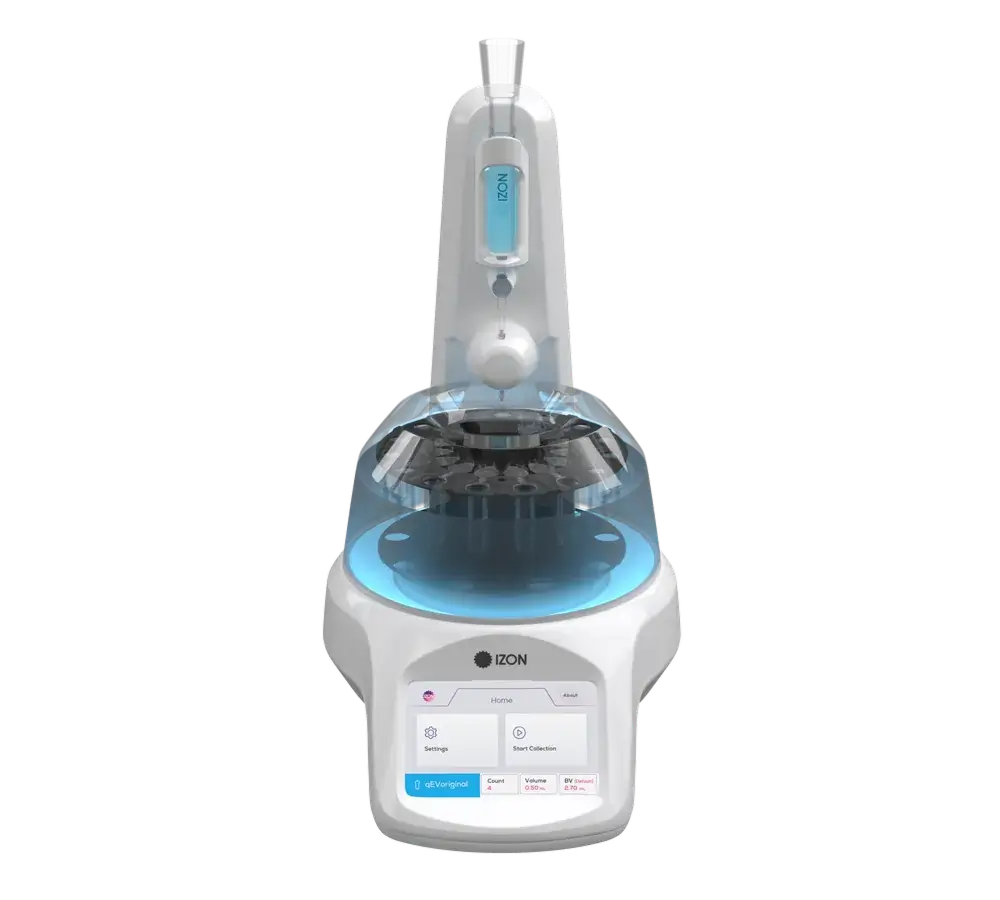
The AFC
AUTOMATE & OPTIMISE
Tune and test your collection parameters with the Automatic Fraction Collector. Automated, reproducible isolation for routine laboratory use.
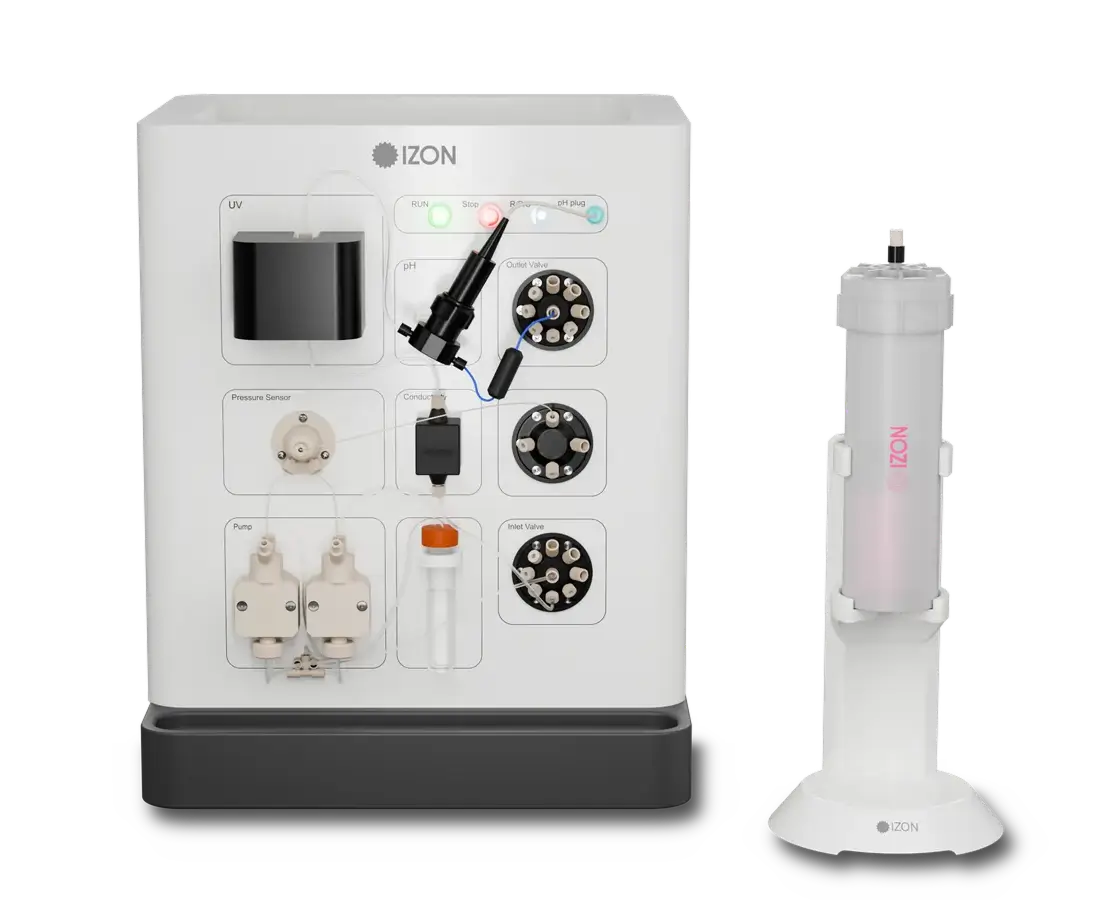
qEV Zenco
SCALE BY VOLUME
Your automated chromatography system for purifying samples from the qEV2, qEV10, qEV100 and larger customised columns.
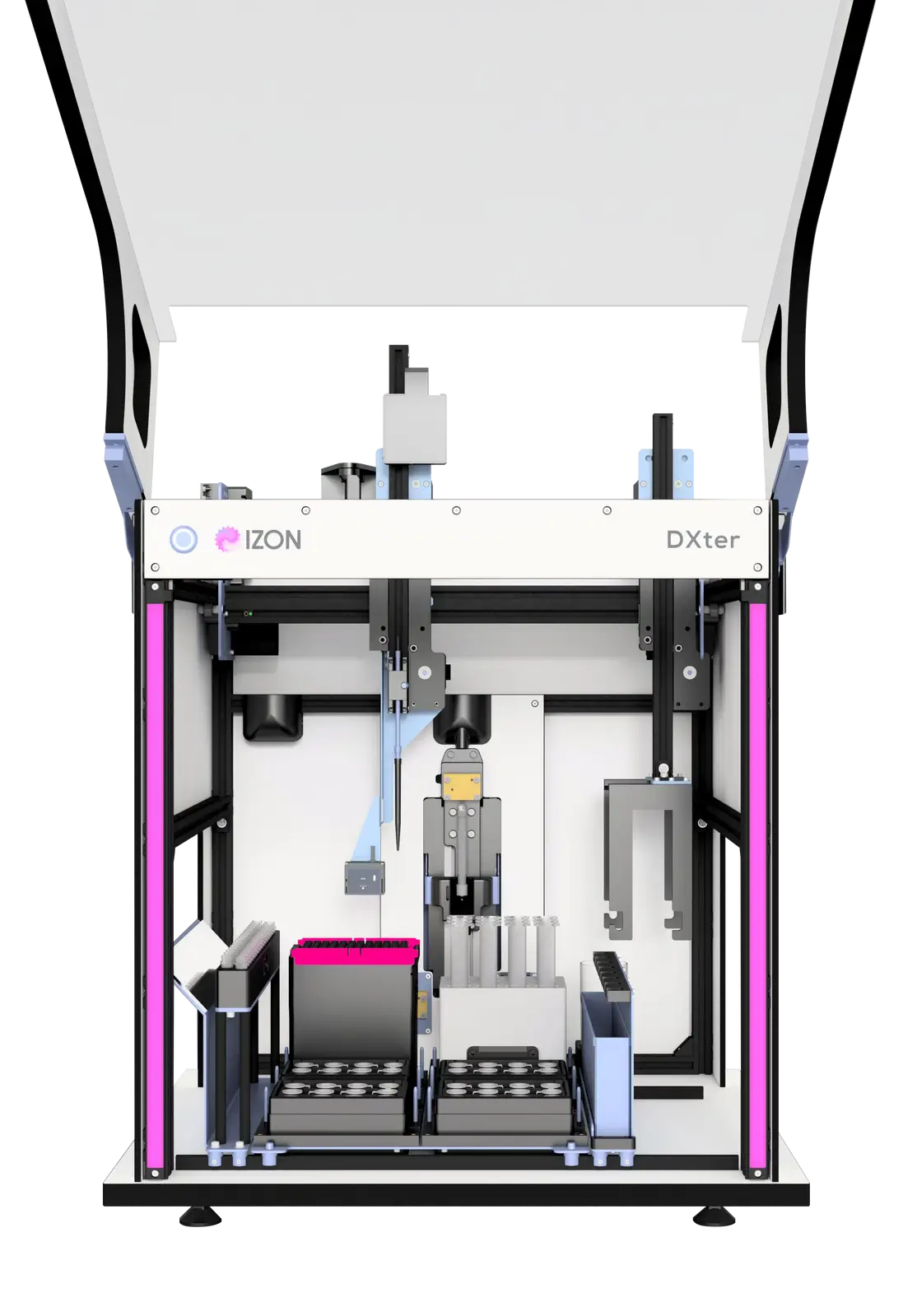
DXter
SCALE BY SAMPLE NUMBER
A robotic liquid handler for processing 24 samples in parallel. Fast-track processing, while keeping your qEV workflow compact and configurable.
Resources
The qEV2, qEV10, qEV100 and larger customised columns can be processed by the qEV Zenco, our automated chromatography system for purifying samples. To learn more visit the Zenco webpage.
Up to 24 qEVsingle, qEVoriginal or qEV1 columns can be processed by the qEV DXter, our robotic automated liquid handling instrument for parallel processing. To learn more visit the qEV DXter webpage.
GMP-ready qEV columns are manufactured and quality-controlled to support use in GMP-regulated environments. Although qEV users are still responsible for regulatory compliance and related risk assessments, the additional measures put in place for GMP-ready column production provide a good starting point if you are working in GMP environments. GMP-ready qEV columns are filled using aseptic methods, with final sanitisation steps performed in a laminar flow cabinet that provides a local environment meeting the ISO Class 7 (Class 10,000) clean room Non-Viable Particulate (NVP) standard. Each batch also undergoes additional cleaning steps and rigorous quality control testing for bioburden and endotoxin levels, against strict targets that must be met before release.
Selecting the optimal column size for your sample volume is important for maximising the purity of EVs in your sample. Loading a sample volume higher than what is recommended results in a lower level of purity in later vesicle-containing volumes, a greater overlap between protein and EV elution peaks, and a higher protein peak within the purified containing volume. Loading a sample volume lower than what is recommended results in a higher dilution factor of the sample. Check the optimal recommended sample volume for your qEV column.
Eluted volumes containing your particles of interest will vary in composition based on the sample, sample preparation and column type. You will need to study the protein and EV content of your fractions and identify which portion is optimal to collect. This will vary depending on whether you would prefer to maximise isolate purity or particle recovery. Typical EV elution profiles for human plasma samples can be found in qEV User Manuals and may serve as a useful starting point.