HOW qEV COMPARES
Not All SEC Columns Are Built the Same.
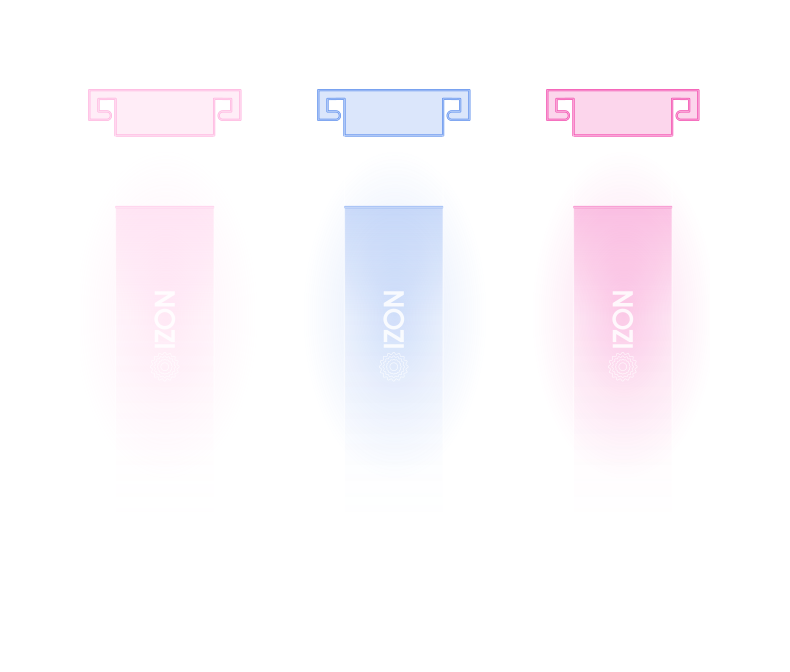
qEV Gen 2 columns use Izon-exclusive SEC resin to deliver higher EV purity and recovery than columns using off-the-shelf resins. Manufactured under ISO 13485, they underpin the world’s most established and scalable EV isolation platform.
~99% protein removed
qEV Gen 2 columns gently remove approximately 99% of soluble protein from human plasma.
Higher EV recovery
Purity gains without a recovery trade-off: Gen 2 recovers significantly more EVs than comparable columns.
Built for clinical translation
Consumable qEV columns are manufactured under a quality management system certified to ISO 13485:2016, with GMP-ready columns available.
Get the Purest EV Isolates Possible
qEV Gen 2 columns, built using Izon-exclusive SEC resin, deliver significantly higher EV purity than columns using standard market resins (CL-4B and CL-2B) — resins Izon's own Legacy columns also once relied on.
qEV Gen 2 columns gently remove ~99% of soluble protein from human plasma.
Maximise EV Recovery
When developing the qEV Gen 2 column range, we engineered every aspect of the design for EV isolation, including an exclusive resin optimised specifically for extracellular vesicles.
The result is significantly higher EV recovery than comparable SEC columns.
Lipoprotein Depletion, Covered
qEV Gen 2 columns remove the vast majority of lipoproteins from human plasma — without a separate binding resin step.
That means a cleaner isolate, without the recovery trade-off that comes with dual-mode chromatography. We tested that approach years ago and moved away from it: binding resins strip out lipoproteins, but at the cost of losing EVs along with them.
Remove ~99% of ApoB with all qEV columns, and achieve >99.99% removal of ApoA1 with the 70 nm series.
What About the 20 nm Series?
Our 20 nm range launched after Gen 2, extending isolation down to smaller EV populations. Since it wasn't part of the original Gen 2 resin upgrade, it isn't included in the comparisons above — but you can see its purity and recovery data on the dedicated qEV Series comparison page.
Built for Clinical Translation
qEV column production has been refined through a precise, proprietary packing technique and protocols guided by a quality management system certified to ISO 13485:2016. For clinical and cGMP workflows, our GMP-ready qEV columns take that consistency further:
- Manufactured under rigorous quality control, with Certificates of Analysis documenting compliance
- Column filling uses aseptic methods, with final sanitisation steps to control bioburden and endotoxin levels
- Made to order, and paired with qEV Automation models for cGMP environments
Start a Conversation About Your Research
A Platform That Scales With You
EV workflows grow in two directions, demanding either more samples or larger volumes. The qEV platform scales to meet both.
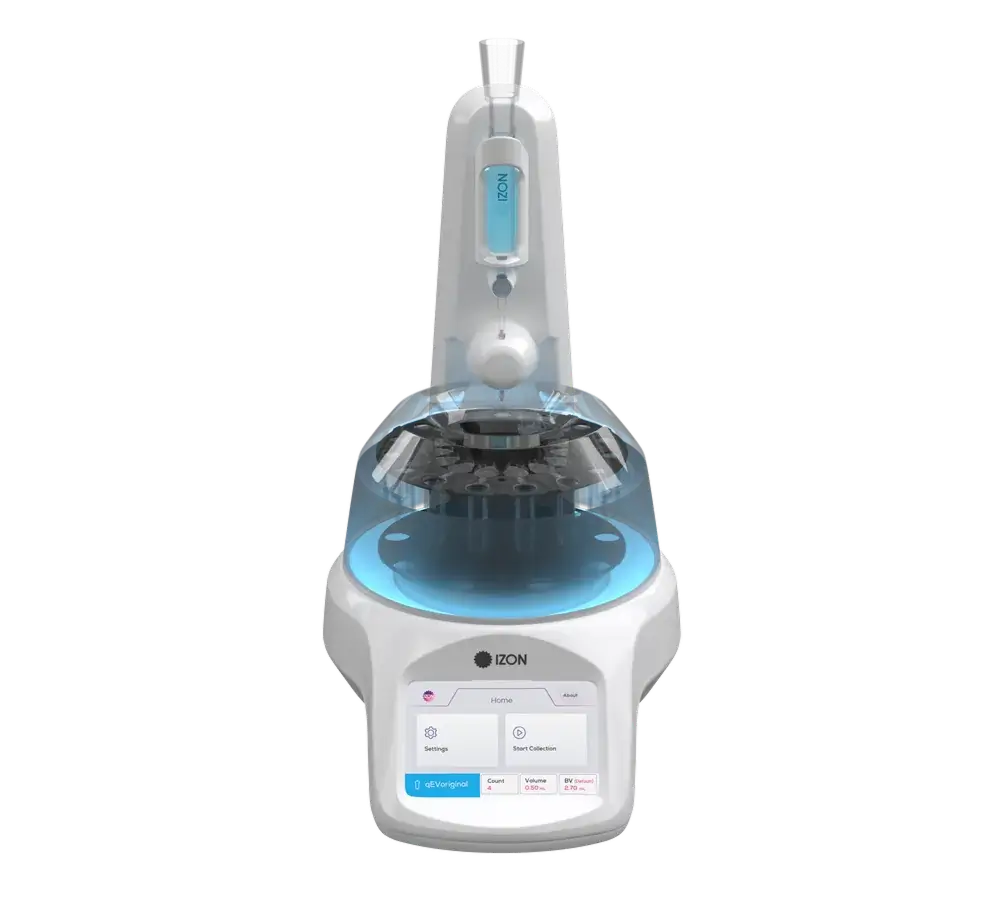
The AFC
AUTOMATE & OPTIMISE
Tune and test your collection parameters with the Automatic Fraction Collector. Automated, reproducible isolation for routine laboratory use.
qEV Zenco
SCALE BY VOLUME
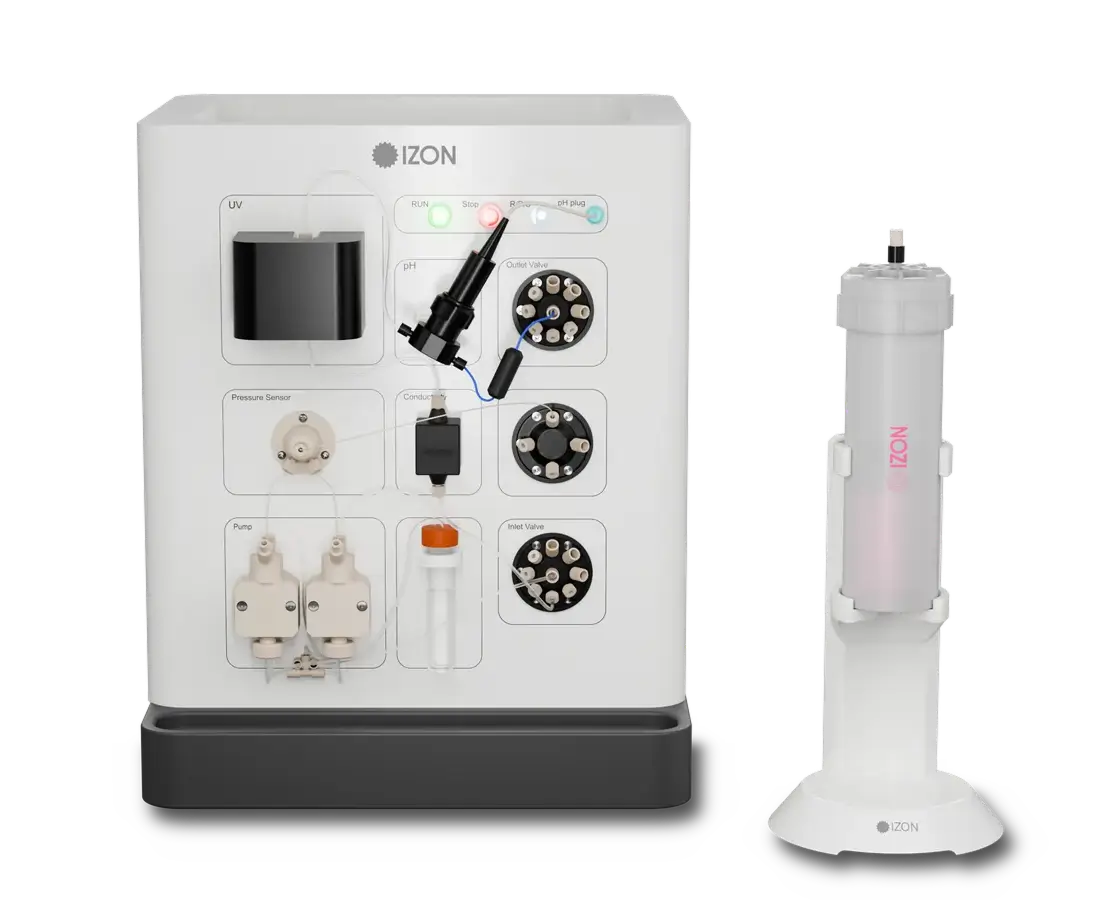
Your automated chromatography system for purifying samples from the qEV2, qEV10, qEV100 and larger customised columns.
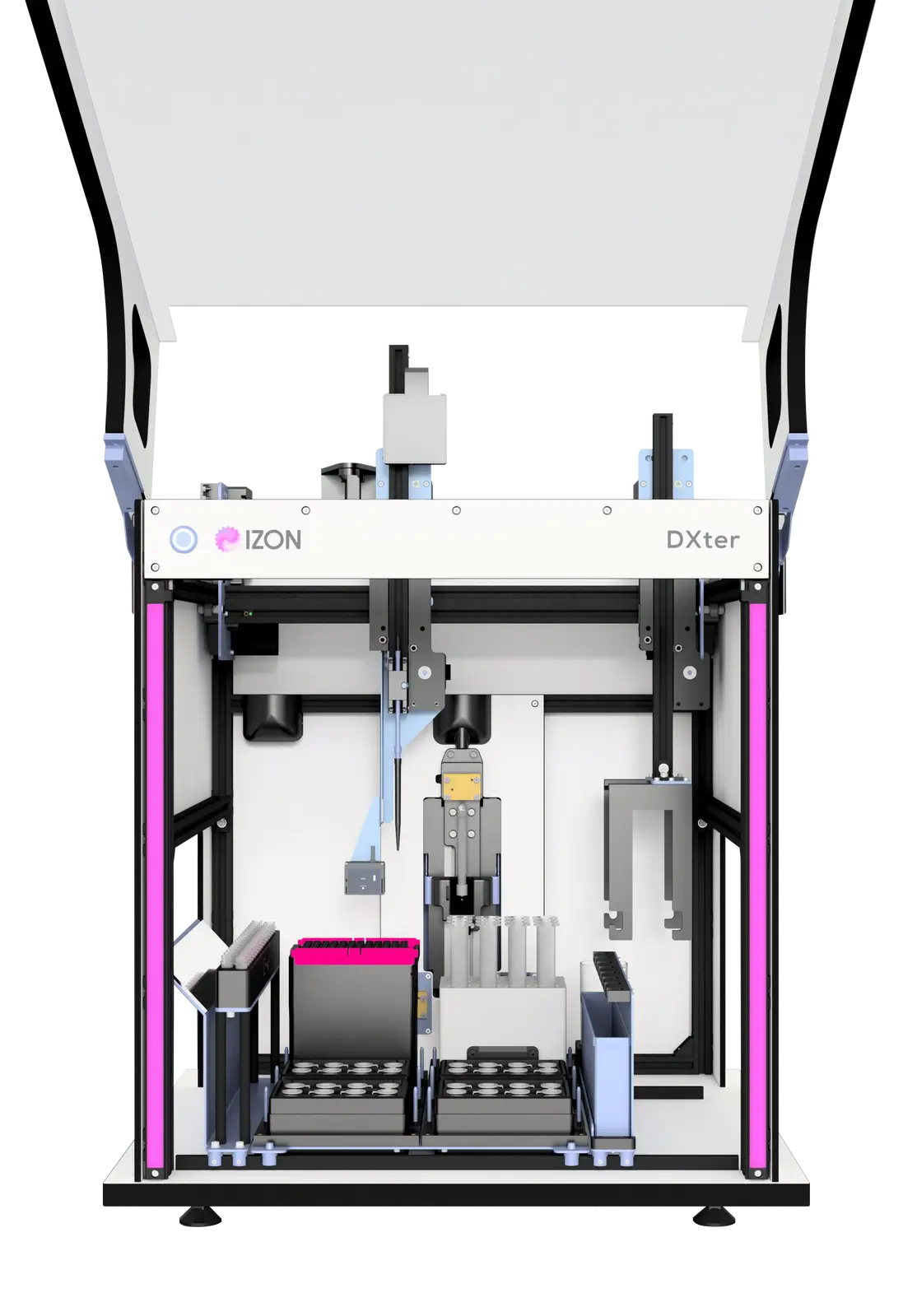
DXter
SCALE BY SAMPLE NUMBER
A robotic liquid handler for processing 24 samples in parallel. Fast-track processing, while keeping your qEV workflow compact and configurable.
Resources
qEV columns come in three series – 20 nm, 35 nm and 70 nm – named after the pore size of the resin used. Each series offers a different balance of particle recovery and purity: the 20 nm series maximises recovery, the 35 nm series balances recovery and purity, and the 70 nm series delivers the purest EV isolates with the highest level of lipoprotein depletion.
This trade-off comes down to size exclusion chromatography: larger particles like EVs pass around the resin beads and elute first, while proteins and other small molecules detour through the pores and trail behind. Larger pores trap more of these small molecules (leading to purer isolates); smaller pores trap fewer (leading to higher recovery, including smaller EVs). For more information, visit the qEV series comparison page or get in touch with the team for more guidance.
- qEVsingle: 20 Columns
- qEVoriginal: 5 or 100 Columns
- qEV1: 5 Columns
- qEV2: 2 Columns
- qEV10: Sold individually
- qEV100: Sold individually
Yes. Fluorescent labels and antibodies are much smaller than EVs, so any free label or antibody can be separated from EVs. The qEV isolation platform is widely used for removing unbound labels and antibodies.
No, qEV columns are not sterile. After production, all qEV columns are equilibrated in filtered PBS containing <0.1% ProClin 200, a common microbial control agent. For cGMP applications, GMP-ready qEV columns are manufactured using aseptic process methods and controls.
qEV columns should be cleaned/flushed between uses according to protocols in the relevant qEV user manual. If you have one of our customised large-scale columns, we can repack your column for repeated use.