

A telescopic microscope equipped with a quanta image sensor for live-cell bioluminescence imaging | Nature Methods
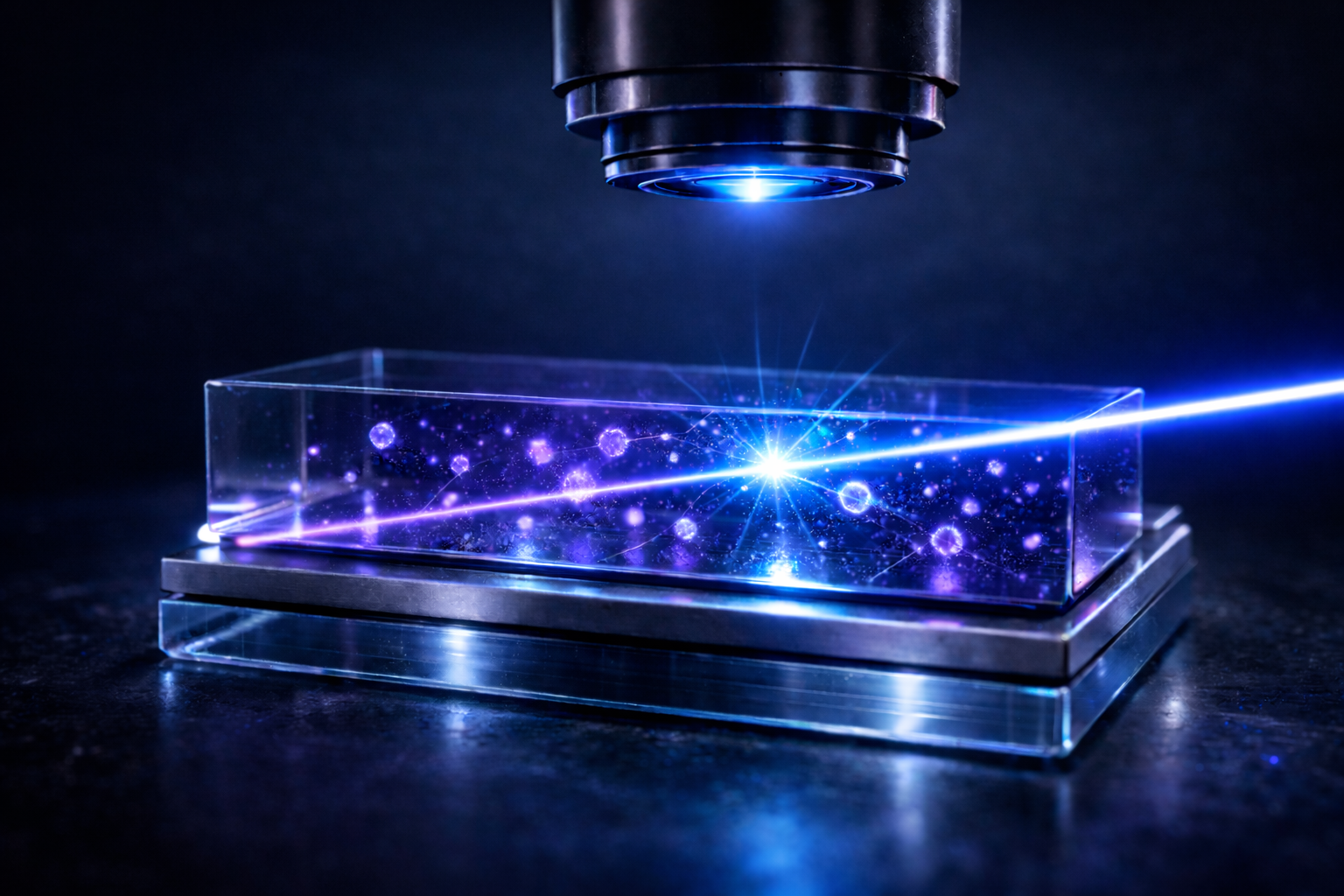
We’ve all been mesmerised by softly glowing deep-sea creatures in nature documentaries. Now, bioluminescence might provide us with a new way to visualise EVs.
A novel imaging system1 allows bioluminescence to be used for live cell imaging – an application previously limited by the innately low intensity of bioluminescence.
To achieve this, the resolution, signal-to-noise ratio, and field of view was optimised through the use of quantum imaging sensing (QIS) and a telescopic microscope. The capabilities of this advanced approach were then demonstrated by imaging EVs in a live cell system and verifying the presence of a reporter gene following qEV Isolation. Ma and colleagues captured some stunning images of EVs in the extracellular space, including EV ‘trails’, potentially left behind by migrating cells.
Circulating extracellular vesicle isomiR signatures predict therapy response in patients with multiple myeloma | Cell Reports Medicine
Precision medicine – the tailoring of treatment to an individual and their illness – holds great hope for cancer patients, where one-size-fits-all approaches to therapy often lead to highly variable outcomes. This is the case for multiple myeloma (MM), a type of blood cancer, where patients show variable degrees and durations of response to therapy. Gómez-Martín et al. used liquid biopsies from patients with MM, to develop classifiers based on plasma EV-associated miRNAs/isomiRNAs.2
These classifiers showed predictive and prognostic potential in validation datasets, identifying cases of active disease, predicting therapy response and even predicting longer term outcomes. While larger cohort studies are needed, these classifiers seem to be promising candidates for developing a clinical assay to support tailored treatment decisions.
Plasma EVs for this work were isolated using qEVoriginal/70 nm SEC columns, automated on an Automatic Fraction Collector (AFC), before being characterised on an Exoid.
Cerebrospinal Fluid‐Derived Extracellular Vesicles: A Proteomic and Transcriptomic Comparative Analysis of Enrichment Protocols | Journal of Extracellular Biology
Biofluids are valuable sources of material for biomarker testing, partly because they tend to be easier to obtain than tissue biopsies. Cerebrospinal fluid (CSF) is one of the more challenging biofluids to collect but is a potential goldmine of information about the brain and spinal cord. Key to unlocking its value is the optimisation and standardisation of protocols for isolating EVs.
This study, authored by García-Arauzo and colleagues, compared four protocols for isolating EVs from CSF3:
- Ultrafiltration (UF) followed by size exclusion chromatography (SEC) using qEVoriginal/35 nm Gen 2 columns
- UF followed by SEC using qEVoriginal/70 nm Gen 2 columns
- Ultracentrifugation combined with qEVoriginal/35 nm Gen 2 columns
- Ultracentrifugation alone
And the winner? Yields were highest from the ultrafiltration/SEC protocols, while the combined ultracentrifugation/size exclusion chromatography particle yield was too low for further characterisation.
Proteomic analysis confirmed that isolates were enriched for expected EV protein markers. While traditional methods of purity assessment based on albumin and apoE levels showed higher purity following ultracentrifugation alone, the authors point out that recent progress in understanding the EV corona explains the presence of these proteins in SEC isolates without implying contamination.
Quantitative cellular characterization of extracellular mitochondria uptake and delivery | Nature Communications
Our final pick for 2025 is a paper by Dache et al., who studied the phenomenon of mitochondrial transfer between cells.4 Understanding this process is a vital step towards therapeutic approaches using mitochondrial transplantation, which could treat conditions ranging from stroke to inherited mitochondrial diseases.
Originally, mitochondrial transfer was thought to occur via intercellular nanotubes. However, questions remain around whether other mechanisms are also at play.
The authors used analysis with qEVoriginal 70nm Gen2 columns to identify free mitochondria in conditioned culture medium. They showed that free mitochondria can be internalised by recipient cells, likely through the endo-lysosomal pathway, and that a small percentage can then escape this pathway into the cytosol. Their results were consistent with escaped mitochondria being able to integrate into the host cell mitochondrial network. Although more work is needed to confirm these findings, this mechanism of mitochondrial uptake could provide opportunities for new therapeutic strategies.
For our mid-year roundup of the first half of 2025, see our previous Publication Watch: 2025 So Far