Measure Size and Concentration with Single-Particle Resolution
See what ensemble methods hide. Analyse extracellular vesicles, lipid nanoparticles, and more, one particle at a time.
High-accuracy sizing
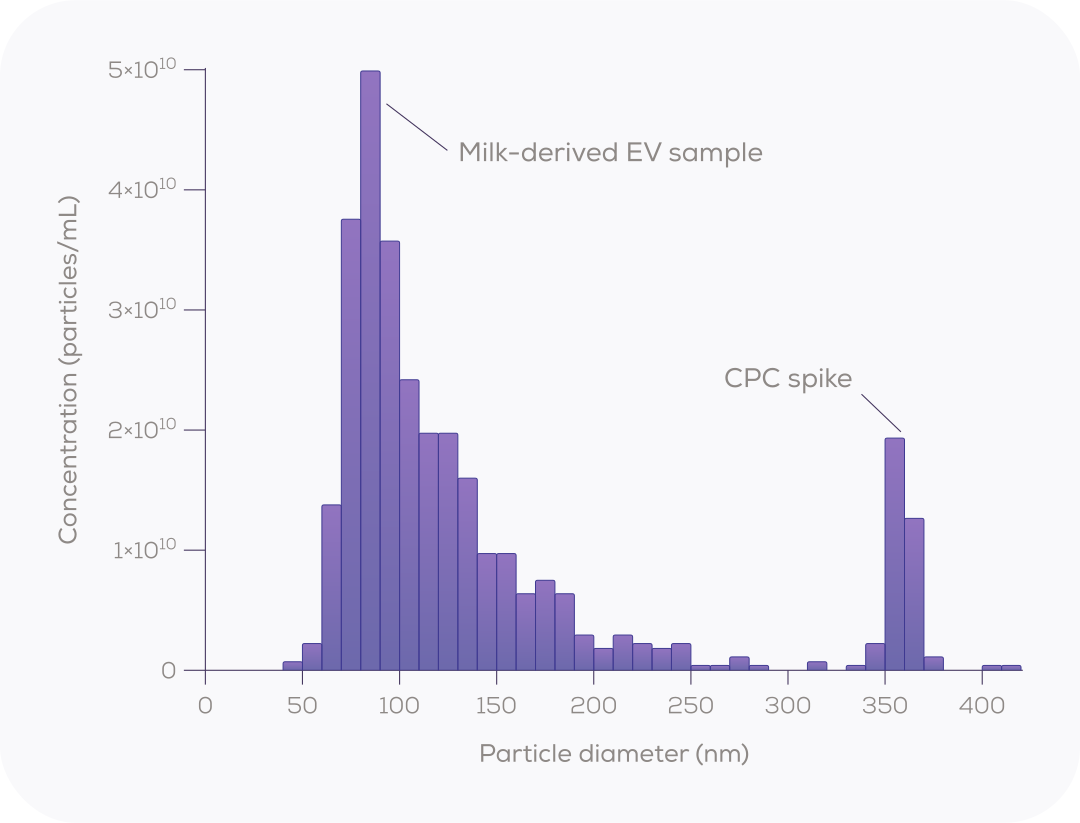
Each particle is sized by its volume, whatever it’s made of.
Counted, not estimated
Concentration comes from direct, calibrated particle counts.
Resolve every population
Separate close-sized populations that light scattering blurs together.
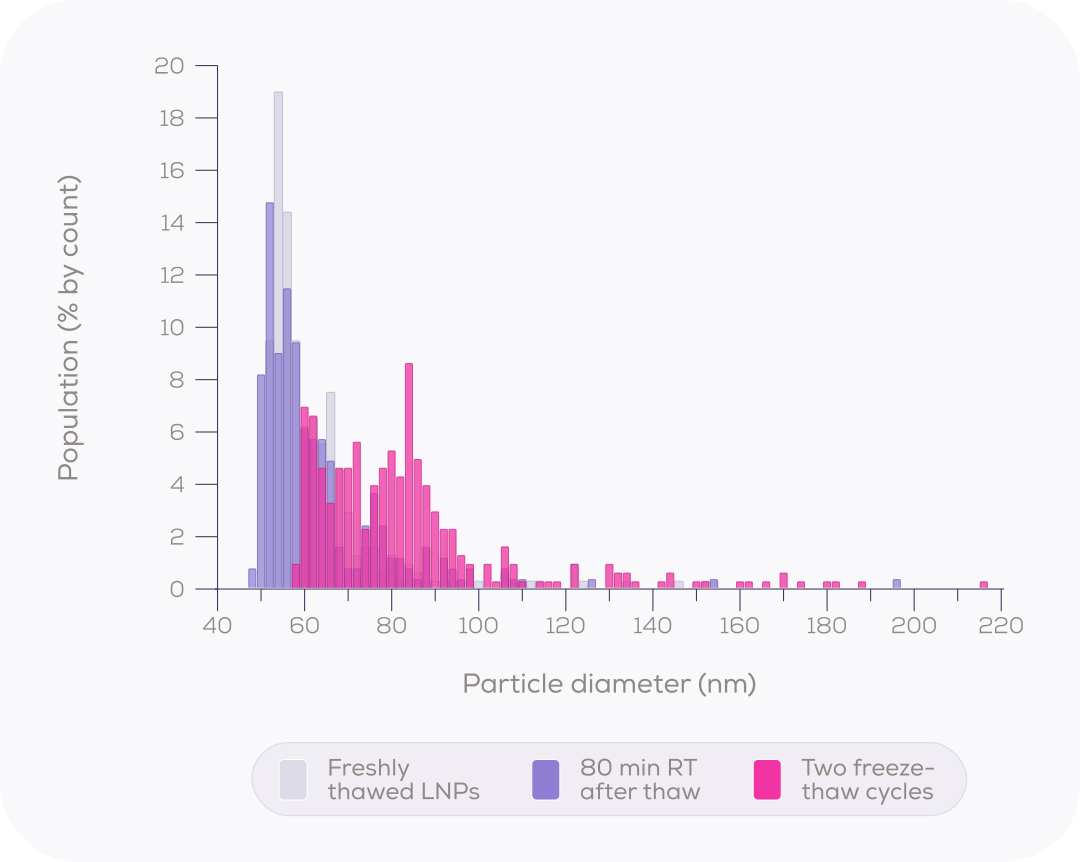
Resolve Size Differences Invisible to Ensemble Techniques
Whereas ensemble methods return a single, smoothed average, our single-particle measurement platforms resolve subpopulations within your sample — revealing distinct peaks that a typical DLS curve blends into one.
This distinction matters most when your sample isn't uniform. Overlapping or closely-sized populations can be indistinguishable by DLS, while our platforms separate them clearly.
Quantify Concentration, Directly
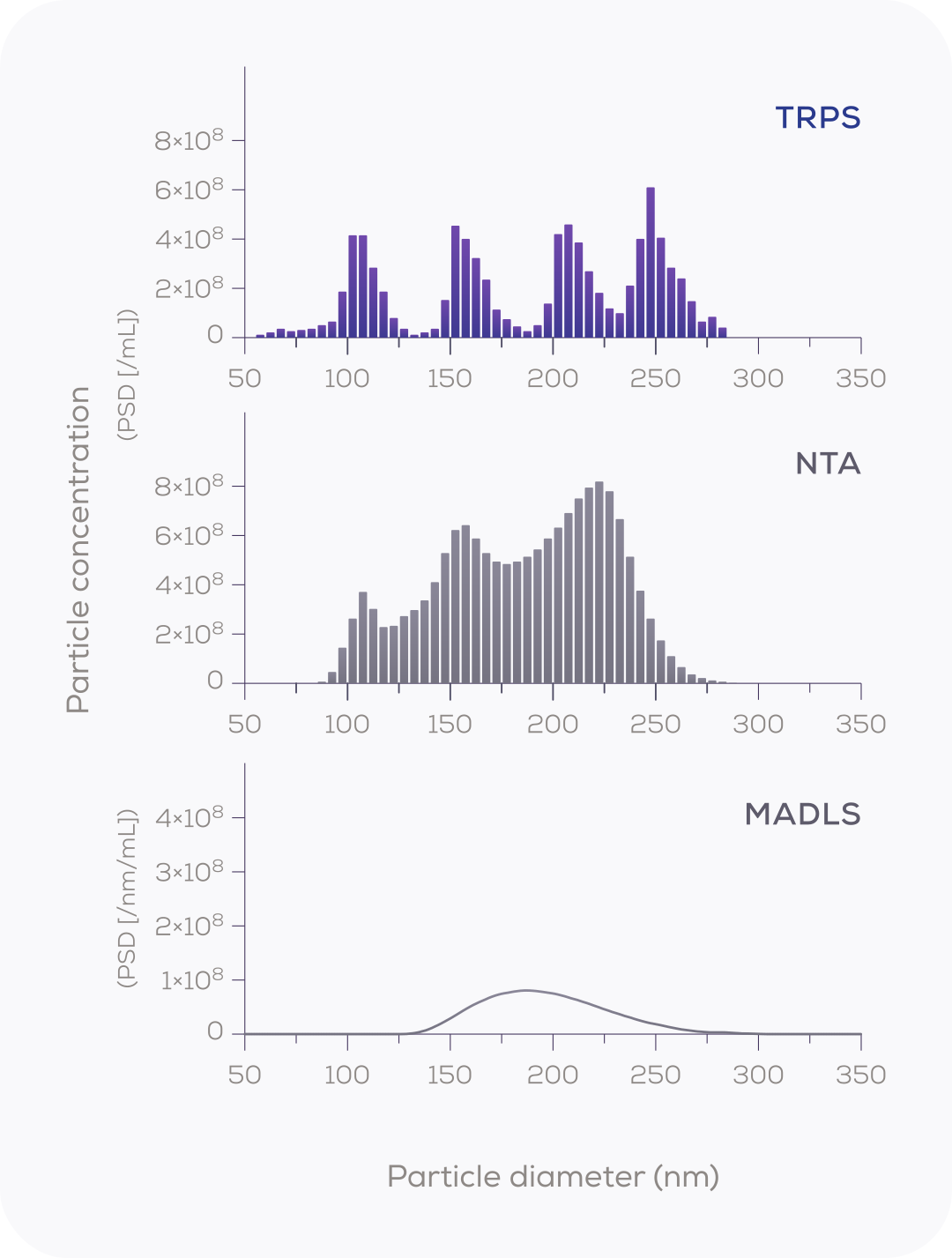
Concentration is measured directly from individual particle translocations, calibrated against a known standard — not estimated from optical assumptions, as required by methods like NTA.
This direct, particle-by-particle approach delivers more accurate, quantitative results within a defined size range, so you can compare samples with confidence.
Discover Heterogeneity That Matters
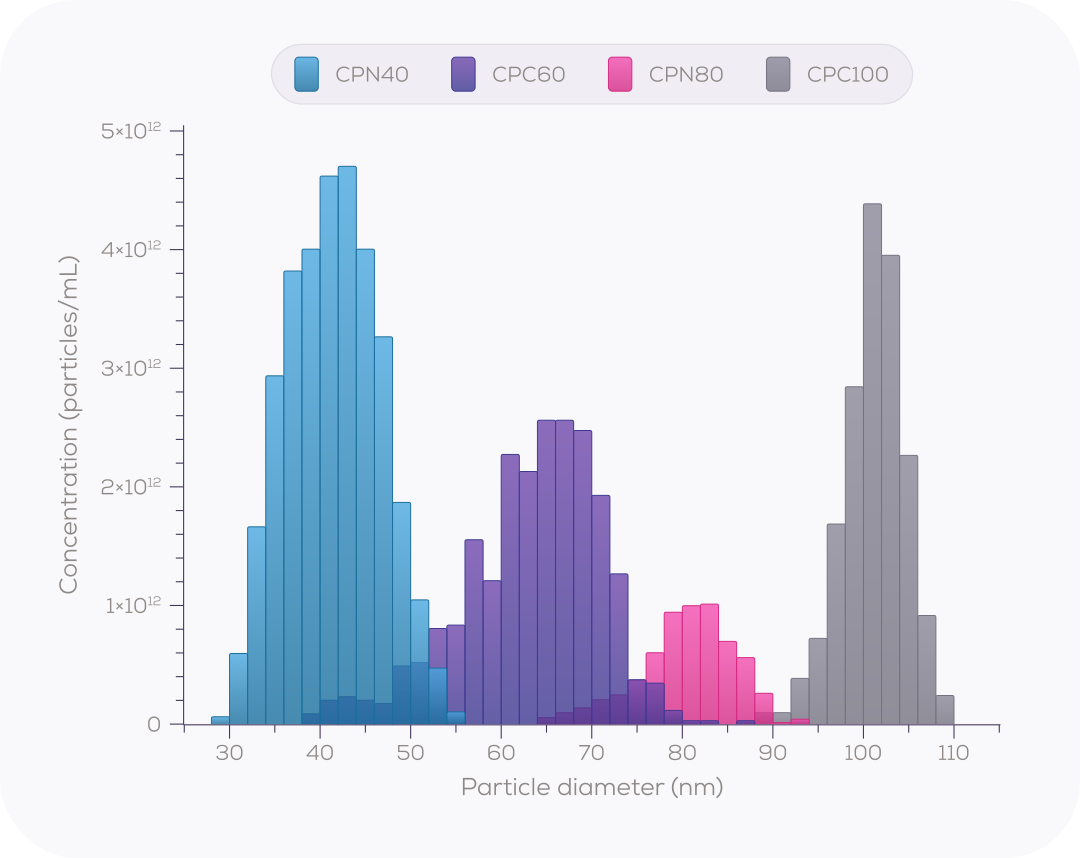
See size distribution alongside the parameters that expose true sample heterogeneity.
Our measurement platforms deliver the sensitivity needed to distinguish subpopulations and detect aggregation — surfacing critical shifts that guide nanomedicine formulation, influence storage methods, refine nanoparticle isolation protocols, and support core particle characterisation.
The Coulter Principle, Refined for the Nanoscale
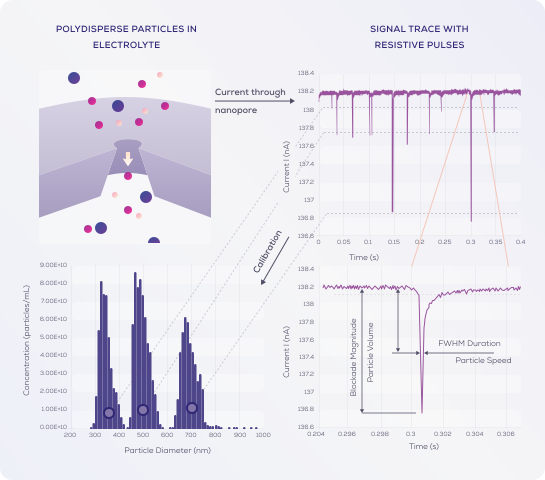
Our measurement platforms, the Pulsoid and the Exoid, use variations of Resistive Pulse Sensing (RPS), a nanoscale evolution of the Coulter principle.
As particles pass individually through a small pore, each generates a signal proportional to its size, while the rate of particles passing through reveals concentration — giving you a true picture of your sample's composition.
Choose Your Platform
Two single-particle measurement platforms, both manufactured under an ISO 13485:2016-certified quality management system. On both platforms, sample particles are measured against standardised, NIST-traceable calibration particles, ensuring reproducibility and measurement accuracy.
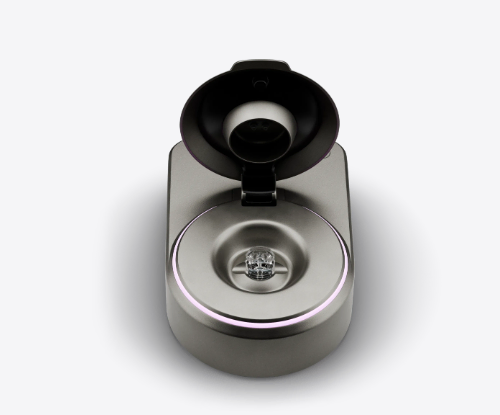
The Pulsoid
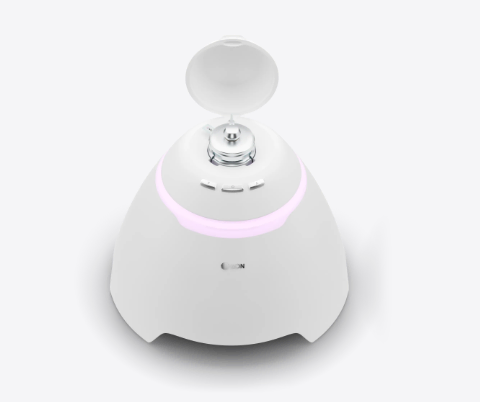
The Exoid
Start a Conversation About Your Research
Resources

Can I test my samples before buying an Exoid?
Yes. Get in touch with your local Izon sales representative to arrange an Exoid demonstration and discuss the possibility of measuring your own samples as part of the demo. This is a great way to see how the Exoid performs with your samples before making a purchase. We also offer a sample measurement service in the US and Europe, providing size, concentration and zeta potential data. Leasing options are also available.
What training and support come with the Exoid?
Every Exoid includes training and ongoing support from Izon’s application specialists, plus access to user manuals, software updates and an online support centre. Software upgrades are included as part of your Exoid package.
How does TRPS compare with NTA and DLS?
TRPS measures each particle individually as it passes through a nanopore, so results aren’t skewed by a few large particles the way light-scattering methods can be. It also measures zeta potential for every particle, giving a more complete picture of complex, mixed samples. See how TRPS works.
What ongoing maintenance and consumables does the Pulsoid need?
Routine maintenance is minimal. The transparent fluid cell is easy to clean, and the main consumable is the silicon nanopore chip. Chips are generally intended for single-session use, although reuse may be possible with appropriate cleaning and storage. For consistent measurement performance, we recommend using a fresh chip for each session.
Is the Pulsoid easy to learn and use?
Yes. The Pulsoid was designed to remove the trade-off between accuracy and usability. Its fixed nanopore and simple setup mean fewer opportunities for user error, a shorter learning curve and consistent results across different users. Request a demo.
What is the difference between the Pulsoid and the Exoid?
The Pulsoid uses a fixed, solid-state silicon nanopore, while the Exoid uses a tunable polymer nanopore (TRPS). The Pulsoid offers faster setup and measurement, more consistent results between users, and the ability to measure particles as small as 30 nm. The Exoid covers a wider overall size range and lower concentrations, making it suited to larger or mixed samples. Talk to us about which suits your research.