Lipid nanoparticles
Track LNP size, concentration and surface charge through formulation, scale-up and storage, and compare batches particle by particle to catch aggregation and instability early.
Characterise LNPs


1Four measurements


Single-particle sensitivity: see subtle shifts in diameter and concentration that sample-wide averages hide.
Surface charge shapes how particles behave. Measured particle by particle, a shift in one group stands out.
Pulse height measures particle volume directly, so non-spherical particles are reported as they are.
2Single-particle resolution

Measured at the single-particle level, diameter and zeta potential separate populations that an ensemble technique would average together, even down to 30 nm.
The Pulsoid sizes individual particles from 30 nm upward, with 99.7% agreement with TEM on NIST-traceable standards¹. So even in polydisperse samples, what you see is what’s really there.
The Pulsoid measures concentration by directly counting individual particles, with a linear response from 10⁹ to 10¹² particles/mL. So when your results change, it’s because your sample did.
3Speed meets simplicity
Minimal day-to-day maintenance, a workflow new users pick up quickly, and results typically in 2–5 minutes per sample². Compared with the Exoid, that’s a fraction of the setup time and around double the throughput.
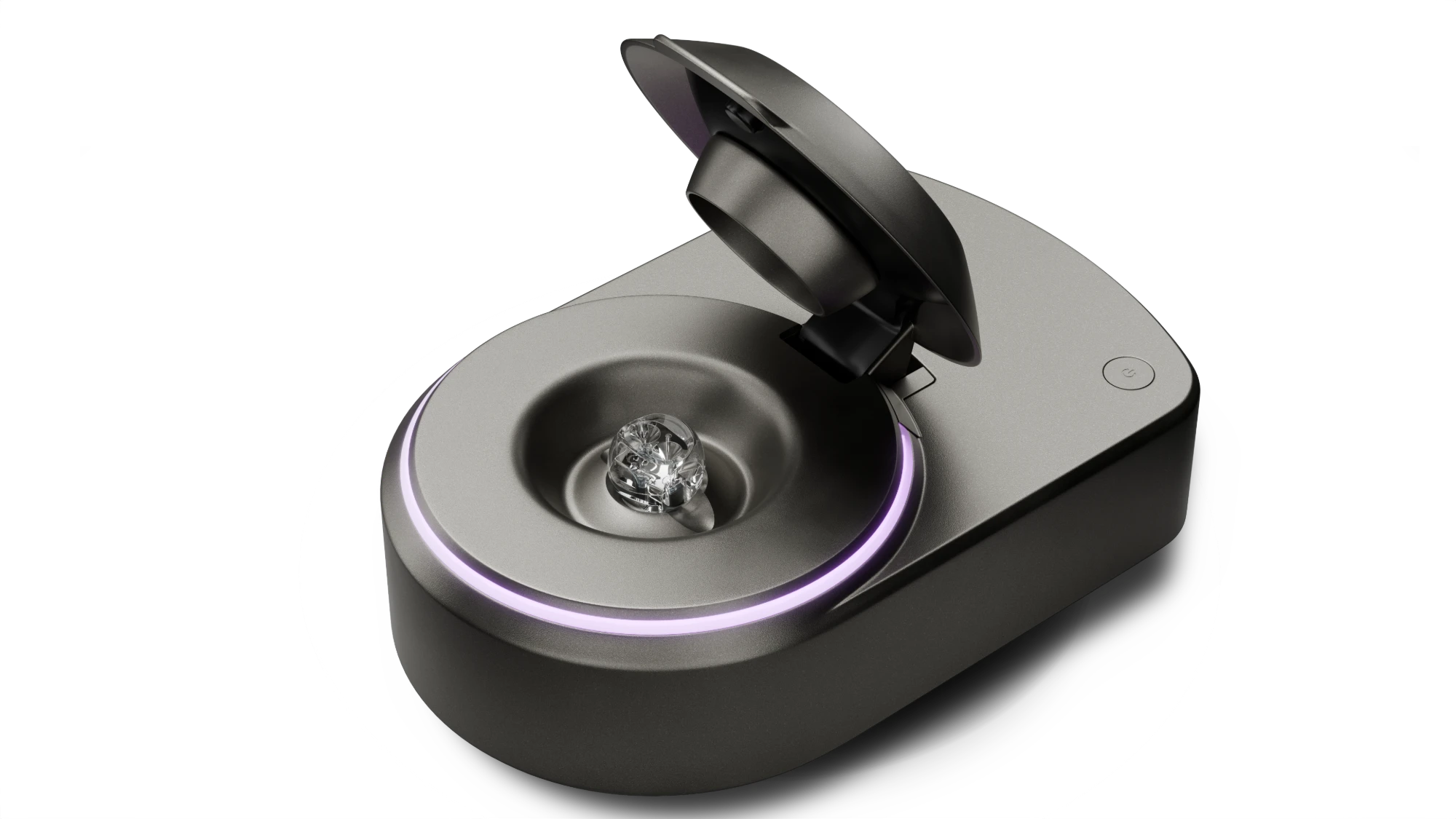
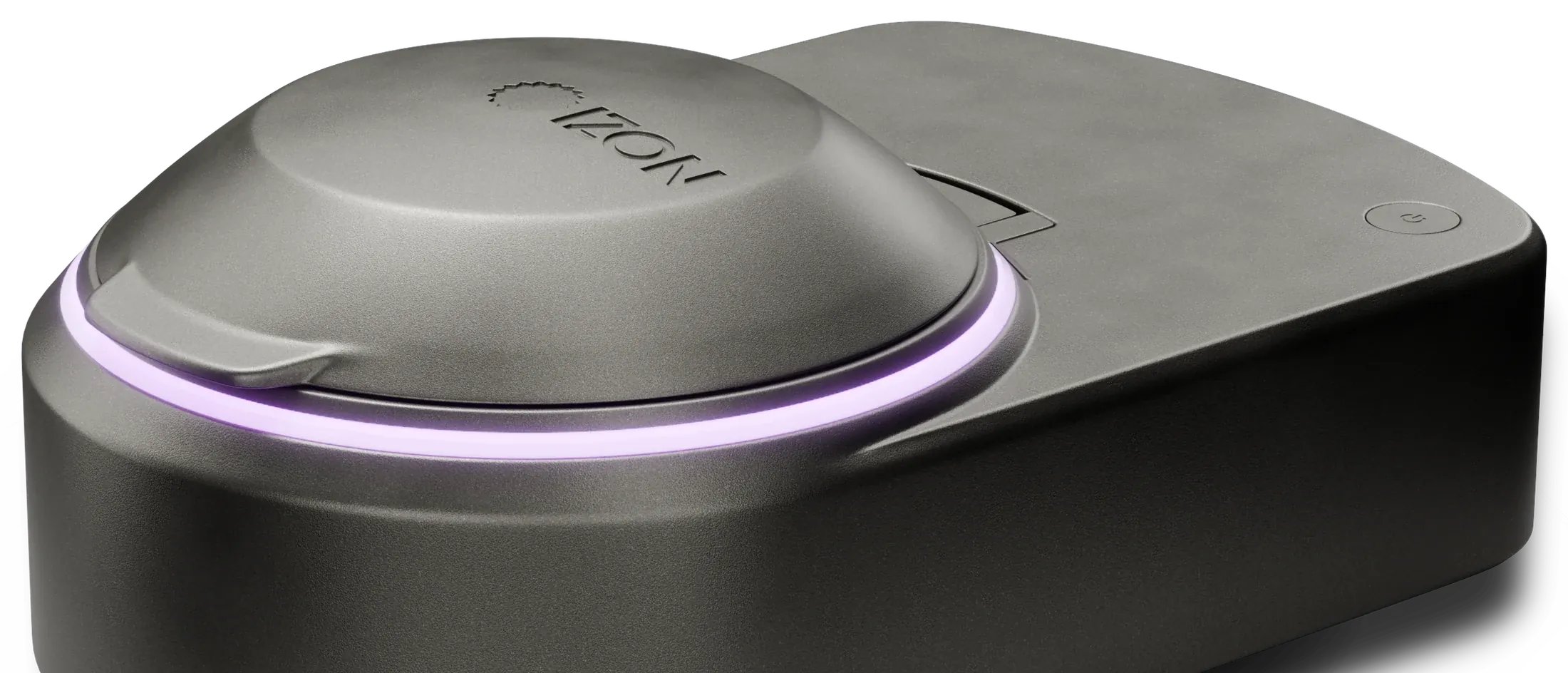
Its fixed pore geometry makes every measurement consistent and repeatable.
Each particle passing through the pore creates a brief pulse in ionic current. Pulse height reveals volume and size, pulse duration reveals zeta potential, and pulse frequency reveals concentration.
Track LNP size, concentration and surface charge through formulation, scale-up and storage, and compare batches particle by particle to catch aggregation and instability early.
Liposomes are proven drug carriers, and their size and surface charge shape how they circulate, release their payload and reach their target. Measure both particle by particle, with concentration, to confirm formulation consistency, track stability and catch subpopulations that ensemble methods blur together.
Resolve the size and concentration of small EVs one particle at a time, and check sample quality after isolation.
Count and size phage particles directly to complement infectivity assays and check purity across production.

Routine maintenance is minimal. The transparent fluid cell is easy to clean, and the main consumable is the silicon nanopore chip. Chips are generally intended for single-session use, although reuse may be possible with appropriate cleaning and storage. For consistent measurement performance, we recommend using a fresh chip for each session.
Yes. The Pulsoid was designed to remove the trade-off between accuracy and usability. Its fixed nanopore and simple setup mean fewer opportunities for user error, a shorter learning curve and consistent results across different users. Request a demo.
The Pulsoid uses a fixed, solid-state silicon nanopore, while the Exoid uses a tunable polymer nanopore (TRPS). The Pulsoid offers faster setup and measurement, more consistent results between users, and the ability to measure particles as small as 30 nm. The Exoid covers a wider overall size range and lower concentrations, making it suited to larger or mixed samples. Talk to us about which suits your research.
