


AUTOMATIC FRACTION COLLECTOR (AFC)
Optimise. Automate. Scale When Ready.
The Automatic Fraction Collector (AFC) automates the collection step in qEV isolation. Set the volumes you need, then collect them consistently across runs with less hands-on involvement.
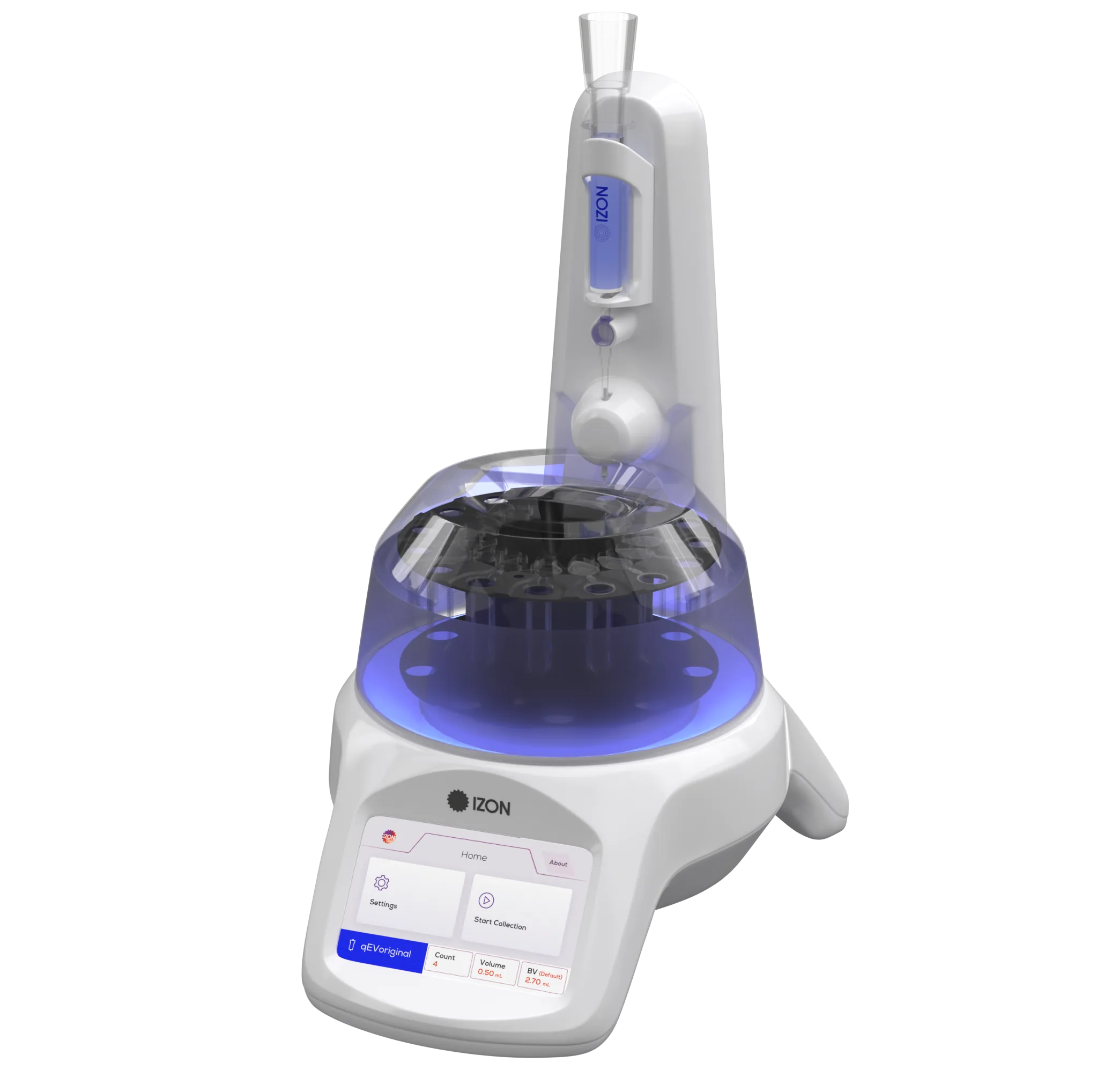
Set your volumes
Set the buffer volume and other collection parameters for each run.
Collect consistently
Collect defined volumes consistently, with collection measured by weight.
Focus elsewhere
Continue with other work in the lab while the AFC handles collection.
Consistent Collection, Run After Run
The AFC brings greater control and repeatability to routine qEV isolation. It measures collected liquid by weight and advances the carousel automatically, reducing inaccuracies associated with manual collection. Apply the same collection parameters across runs, then focus on other work in the lab while collection proceeds.
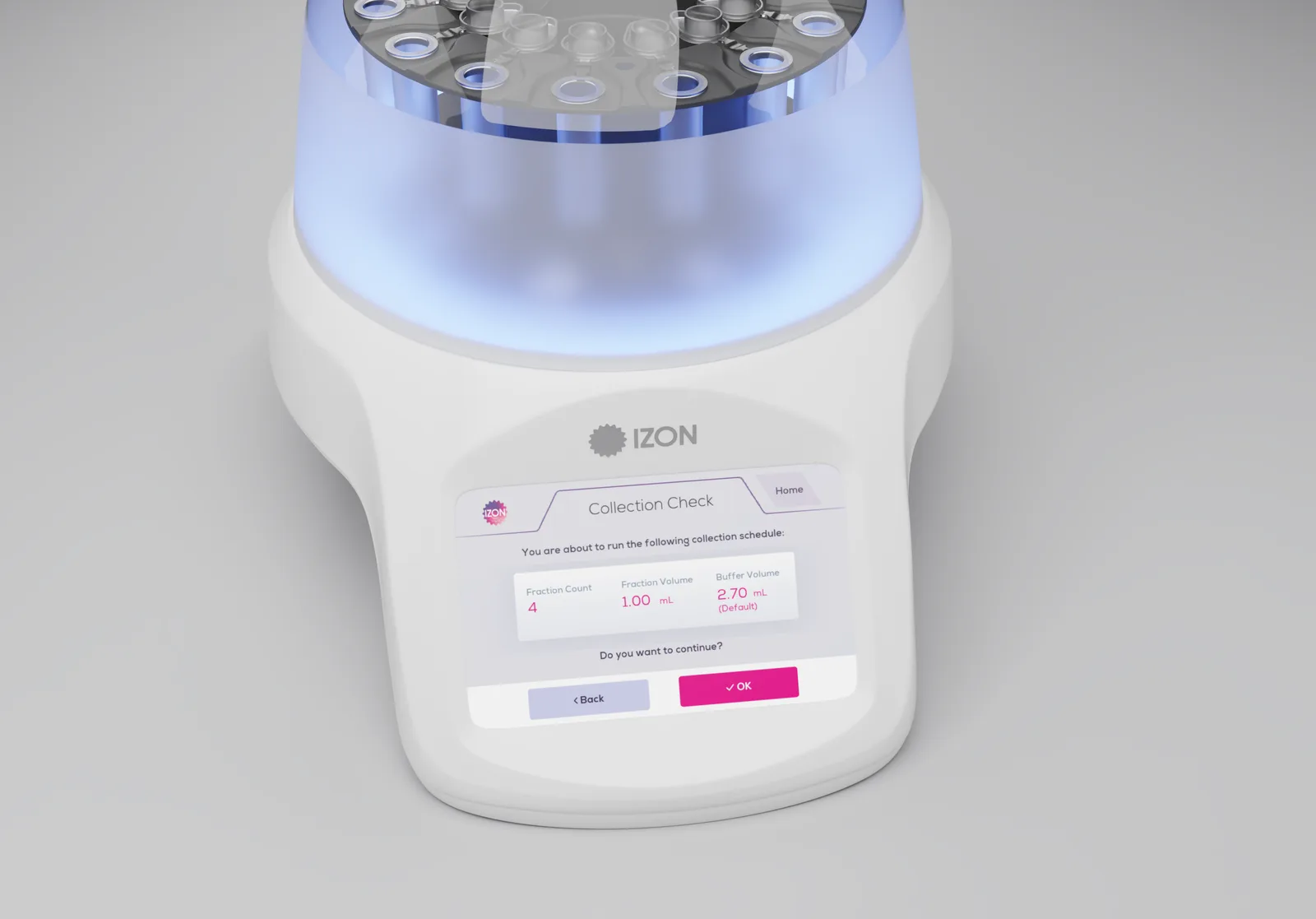
Set the Collection That Suits Your Sample
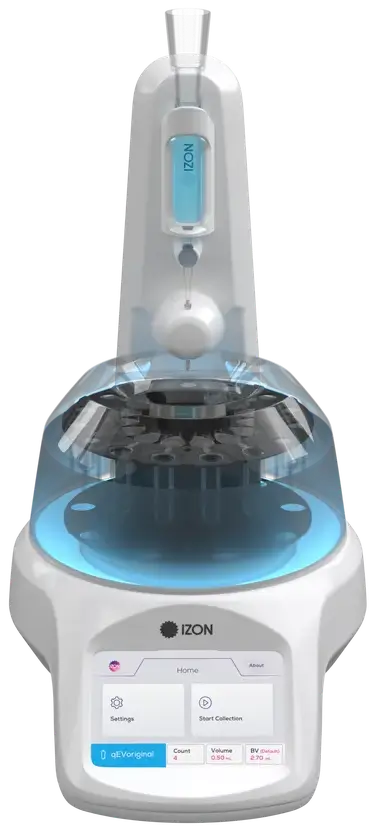
Adjust buffer volume, fraction volume and fraction number directly from the touchscreen. Your purified collection volume (PCV) is the volume of qEV eluate containing your highly purified particles of interest. To identify the optimal PCV for your experiment, collect small-increment fractions and examine the elution profile in detail. Once you've refined your PCV, collect it into a single vessel where supported, removing the need to pool fractions manually.
How the AFC Works
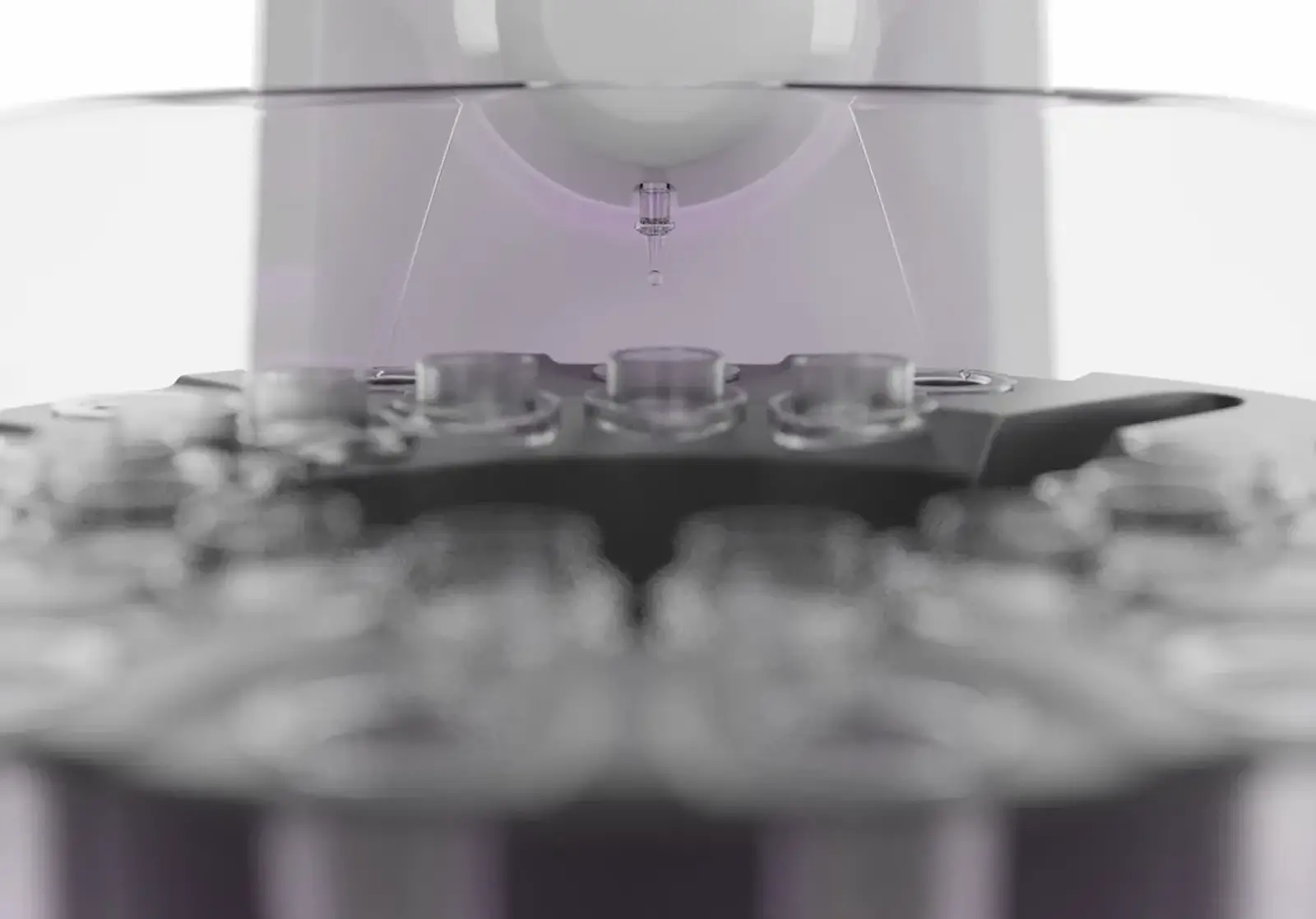
Attach a compatible RFID-tagged qEV column and the AFC identifies it, then displays the relevant default collection settings. Adjust the parameters from the touchscreen and begin collection. The AFC measures each fraction by weight and advances the carousel automatically, while LED lights provide clear visual feedback. The reversible carousel supports 1.5 mL, 2 mL and 5 mL collection vessels, depending on the qEV column in use.
Watch: the AFC in operation
Scale at the Level Your Lab Needs
Sample numbers and sample volumes grow at different rates, and they need different instruments. Most qEV workflows start on an AFC, where fraction-level control lets you resolve your collection parameters in detail. Those parameters are what you carry forward when you scale up.
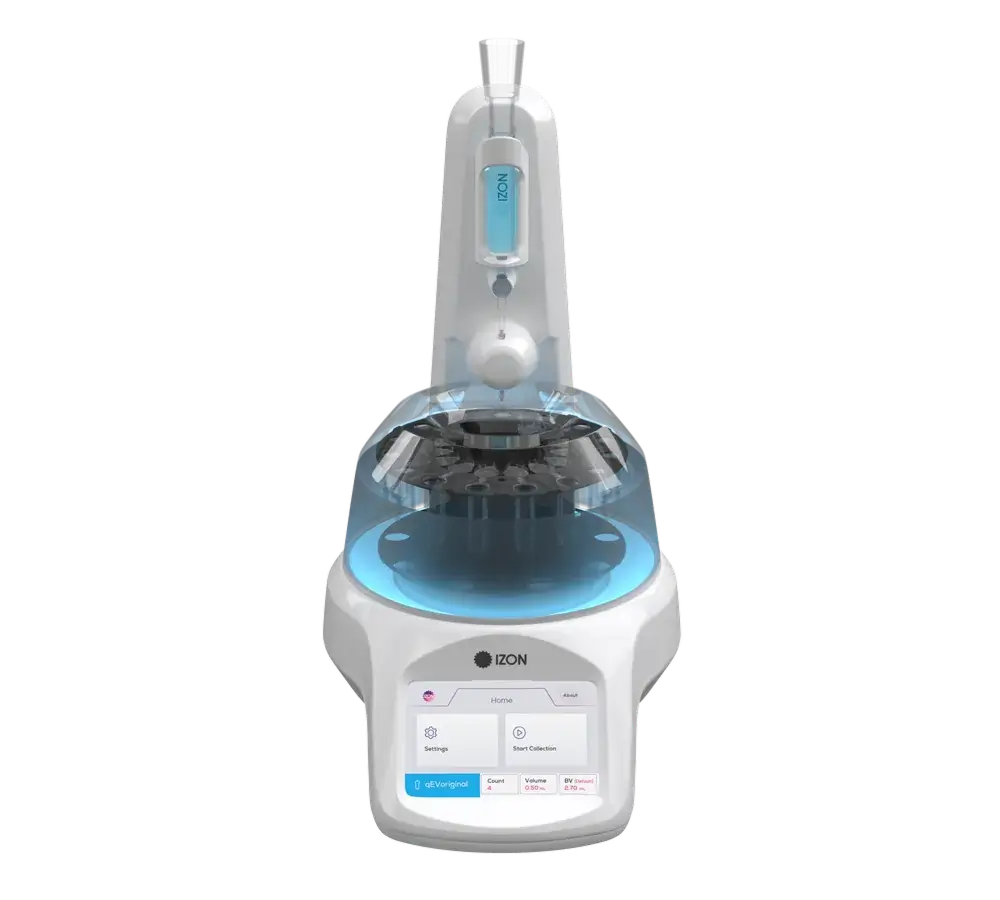
The AFC
AUTOMATE & OPTIMISE
Tune and test your collection parameters with the Automatic Fraction Collector. Automated, reproducible isolation for routine laboratory use.
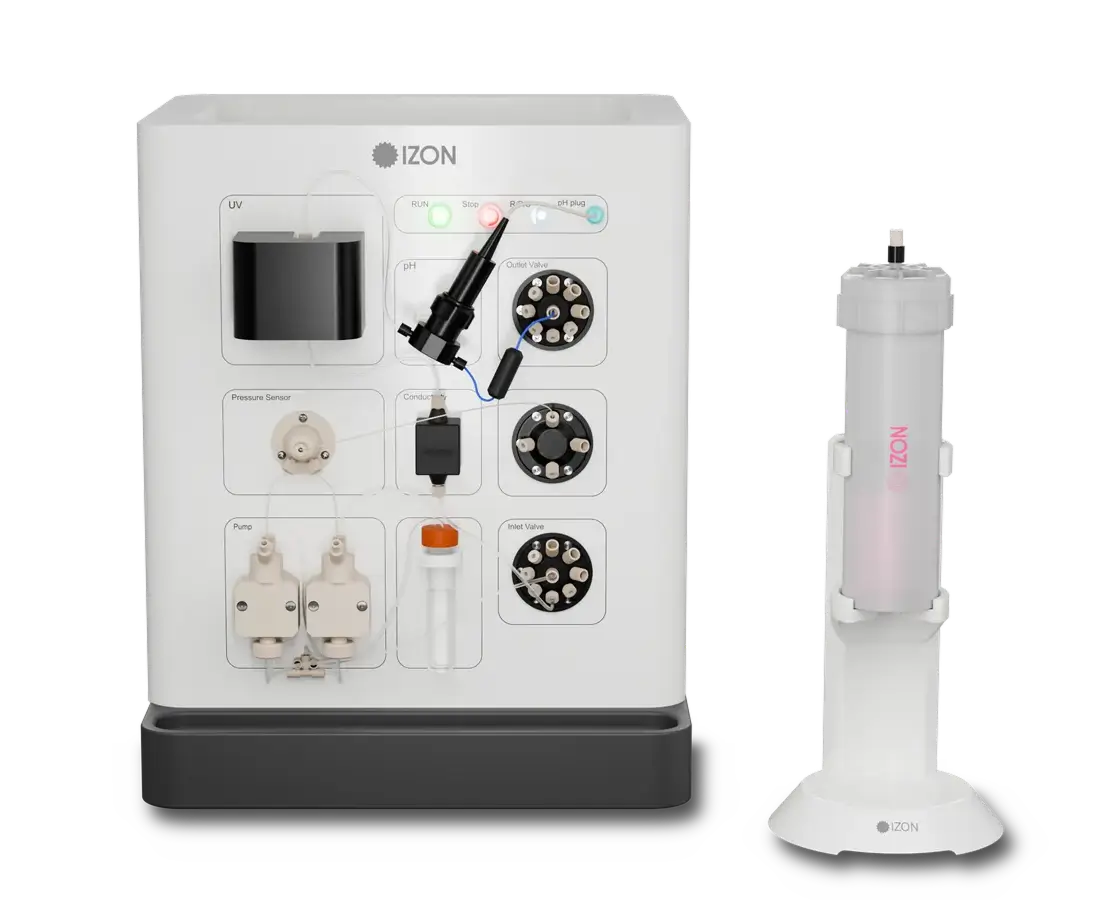
qEV Zenco
SCALE BY VOLUME
Your automated chromatography system for purifying samples from the qEV2, qEV10, qEV100 and larger customised columns.
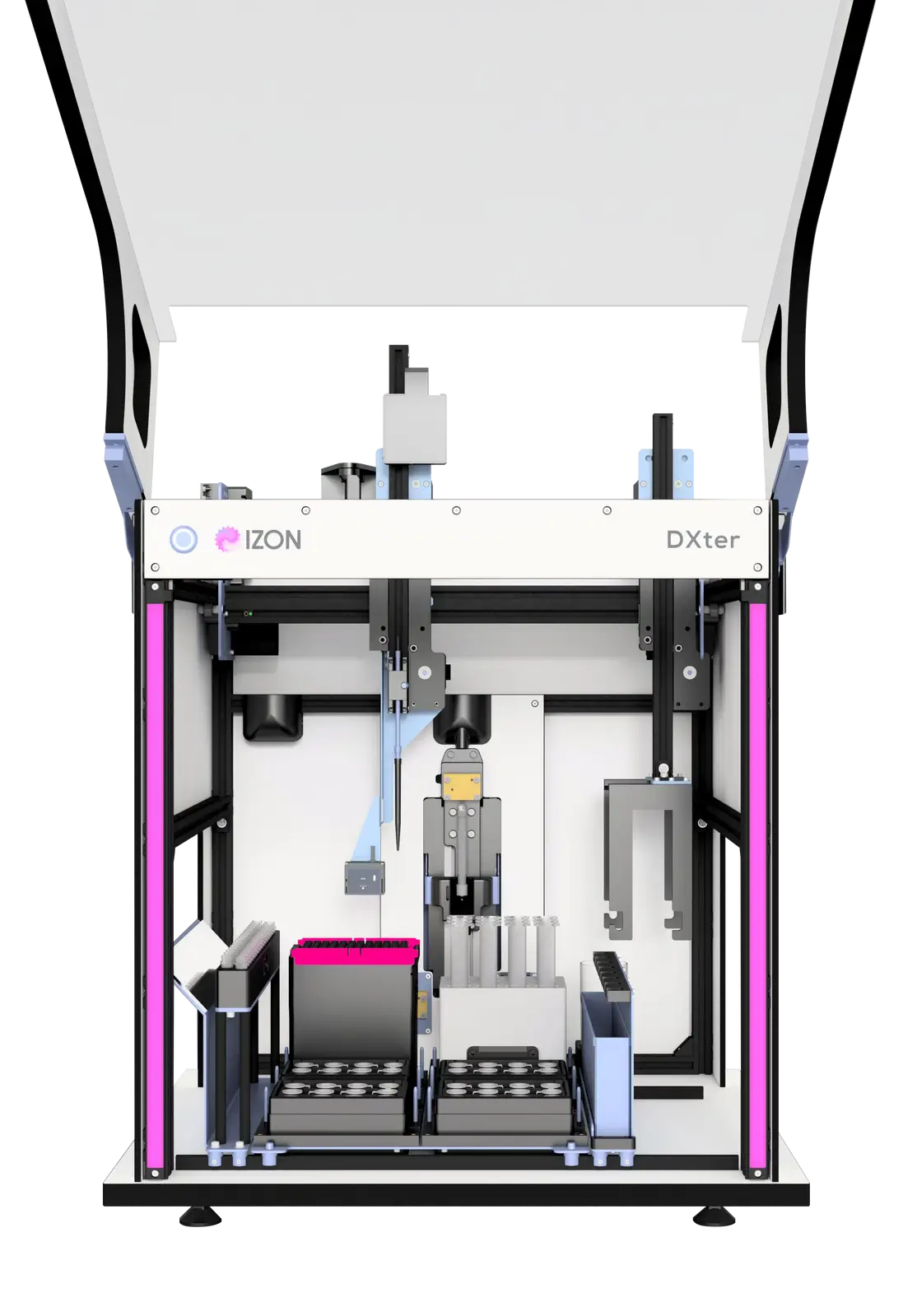
DXter
SCALE BY SAMPLE NUMBER
A robotic liquid handler for processing 24 samples in parallel. Fast-track processing, while keeping your qEV workflow compact and configurable.
Multiply Your Throughput
The qEV Isolation platform gives you several pathways to scale, and adding AFCs is one of them. Running multiple units side by side brings bulk pricing and multiplies your throughput, with the option to dedicate each instrument to a different method.
Prices in USD from the Izon store. Regional pricing and distributor terms may differ.
AFC Specifications
Dimensions (cm)
w25 x d30 x h40
Weight
1.2 kg
Touchscreen size
5-inch diagonal, 800 x 480 resolution
Minimum Isolation Time
10-15 min (dependent on qEV column)
Column data provided to user
Column type, number of remaining uses
Certification
The AFC is manufactured in Christchurch, New Zealand, under a quality system certified to ISO 13485:2016.
Start a Conversation About Your Research
Resources
Yes. Depending on the size of the resin pores, particles that are smaller than the pores will enter the resin and their progress through the column will be slowed. Hence, these particles may appear in later fractions. Columns have been optimised to reduce this as much as possible.
No. The column length is not long enough to achieve this type of resolution effectively.
There are many different types of blood collection tube available and the anticoagulant present in the tube can affect the functionality and quantity of EVs present in blood products. Anticoagulant choice is therefore dependent upon circumstance and application; to learn more, read this article about choosing a blood collection tube for EV research.
Choose your qEV column size based on your sample loading volume. To choose your column type, you will need to consider whether you would prefer to prioritise particle recovery or particle purity. Visit the qEV series comparison page to compare qEV series. If you are still unsure, reach out to our friendly support staff for guidance.
qEV columns come in three series – 20 nm, 35 nm and 70 nm – named after the pore size of the resin used. Each series offers a different balance of particle recovery and purity: the 20 nm series maximises recovery, the 35 nm series balances recovery and purity, and the 70 nm series delivers the purest EV isolates with the highest level of lipoprotein depletion.
This trade-off comes down to size exclusion chromatography: larger particles like EVs pass around the resin beads and elute first, while proteins and other small molecules detour through the pores and trail behind. Larger pores trap more of these small molecules (leading to purer isolates); smaller pores trap fewer (leading to higher recovery, including smaller EVs). For more information, visit the qEV series comparison page or get in touch with the team for more guidance.
